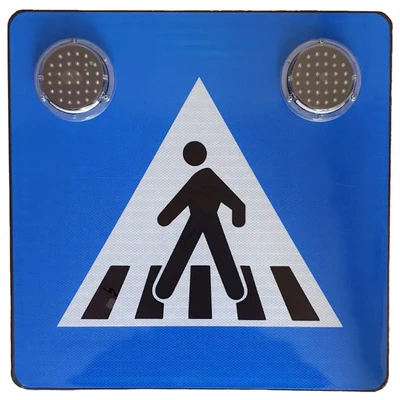
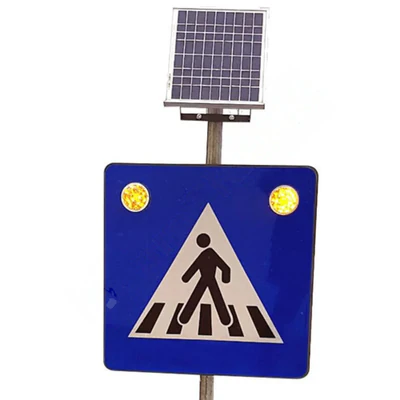
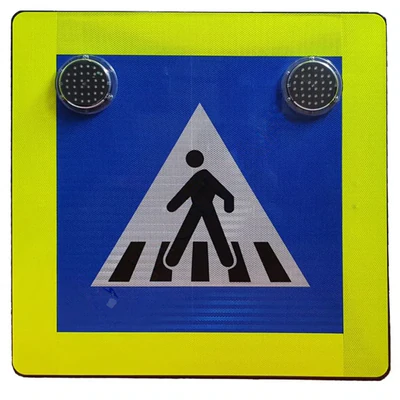
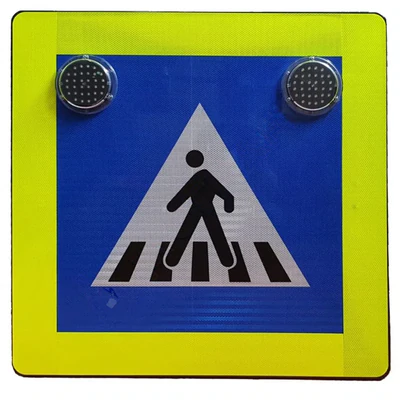
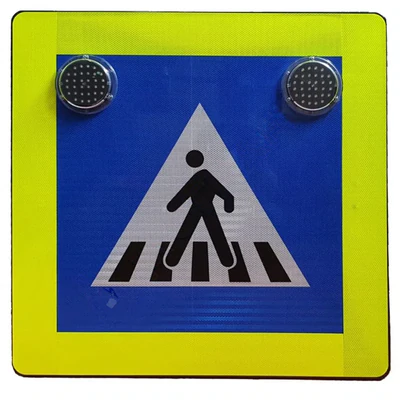
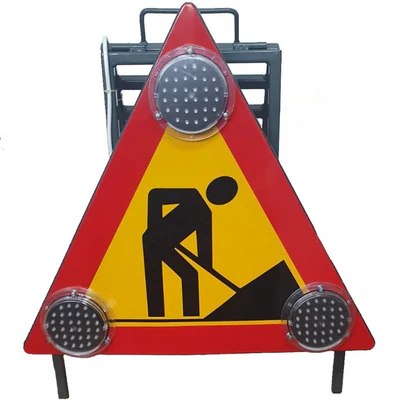
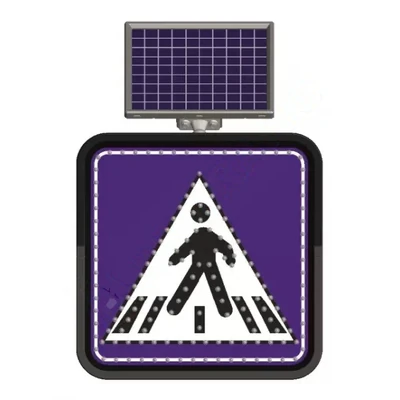
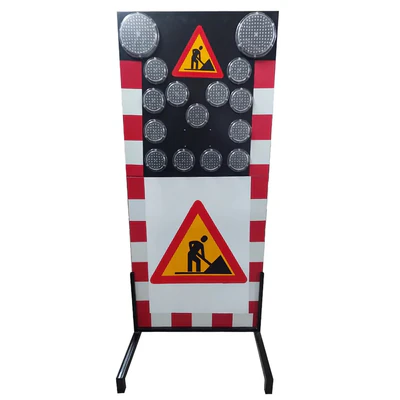
LED signs are modern road signalling solutions designed to attract rapid attention to traffic participants, especially in high-risk areas. These lighting systems are frequently used in road works, crowded urban areas or under low visibility, where classical signalling is not sufficient. They are ideal for authorities, construction companies, logistics or interventions, offering a real extra safety and control. Through LED technology, these indicators become visible from a distance and significantly reduce the risk of accidents.
What LED indicators are
LED indicators are Light road signs equipped with LED diodes that emit intermittent or continuous light to signal hazards, restrictions or directions.
They may replace or complete the classic signal, being used in particular where:
- visibility is low
- traffic is intense
- there is a high risk of accident
Unlike standard indicators, they are active, not just reflective.
Where they are used
In road works
- delineation of construction sites
- traffic diversion signaling
- warning on temporary hazards
In cities and urban areas
- crossings of heavily circulated pedestrians
- dangerous intersections
- zones with speed limits
In industrial or logistic areas
- Loading platforms
- restricted access areas
- internal circulation routes
In special situations
- emergency response
- night work
- difficult weather conditions
How it works
Light indicators work based on integrated LED modules, usually fed by:
- batteries
- accumulators
- Solar panels
- Electricity network
Signalling may be:
- intermittent (Flashes for quick warning)
- continue (for constant information)
Some models include:
- Light sensors (automatic night activation)
- Intensity control
- remote control or programming
Why They Are Important
In traffic, reaction time is essential. A visible LED indicator:
- reduces the reaction time of drivers
- increase attention
- prevents accidents in critical areas
LED indicators shall be essential in particular under the conditions of:
- mist
- rain
- Dark
- intensive traffic
Their integration into modern signalling systems contributes directly to the Real road safetyNot just compliance.
Advantage
The main benefits of using light indicators:
- Higher visibility, including at night
- Low energy consumption due to LED technology
- Long life
- Resistance to extreme weather
- Fast and flexible assembly
- Possibility of autonomous power supply (solar)
- Strong visual impact on traffic participants
Types / variants
Integral LED indicators
Standard signs that include LEDs in their structure.
Road panels with LED
Large dimensions, used for complex or directional signalling.
Signs with intermittent LED
Used for rapid warning (e.g. hazard, work).
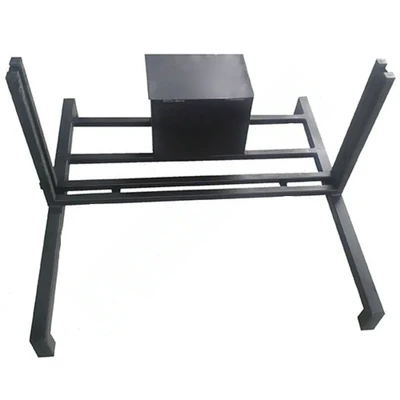
Mobile indicators
Mounted on supports or trailers, easy to relocate.
Systems with solar panels
Autonomous, ideal for areas without access to electricity.
Differences between options
The right choice depends on a few key differences:
- Food type: solar vs. electric
- Mobility: fixed vs portable
- Light intensity: standard vs. high-intensity
- Signalling type: static vs. dynamic
- Size: small for alerting, large for targeting
A large LED panel does not replace a simple indicator – each has its own clear role.
How to choose correctly (GHID PRACTIC)
Important criteria
- Application type (temporary vs. permanent)
- environmental conditions
- the required distance of visibility
- available source of supply
- necessary mobility
Common errors
- Choosing a model that is too weak to see
- ignoring weather conditions
- incorrect or unstable mounting
- Lack of maintenance
Quick Checklist
- Is it visible from far enough?
- Is it suitable for the environment of use?
- Does she have enough autonomy?
- Is it easy to install and move?
Install & start up
The installation must comply with a few simple rules:
- position at correct height
- stable fixation
- orientation to traffic flow
- check operation before use
In the case of solar models:
- the panel must be oriented correctly towards the light
- avoided the shadows
Maintenance & Maintenance
For optimal operation:
- regular cleaning of the LED surface
- verification of batteries/accumulators
- testing of functionality
- replacement of worn components
A well-maintained indicator can run for years without problems.
Common errors and solutions
- Low visibility → choosing a model with greater intensity
- Reduced autonomy → opting for larger solar panels or batteries
- Unstable assembly → Use of professional supports
- Incorrect use → Compliance with manufacturer's instructions
Professional recommendations (from experience)
In practice, the most effective solutions are those that are exactly adapted to the situation in the field.
For example:
- in works at night, intermittent LEDs are much more efficient than classic signs
- in areas without electricity, solar panels completely eliminate power problems
- in intensive traffic, size and intensity make the difference
Well-chosen LED indicators not only signal but effectively prevent incidents.
LED indicators offer efficient, visible and safe road signs, being the ideal solution for works, intense traffic and low visibility conditions.
Why choose Protrafic Indicators
Choosing a suitable supplier makes the difference between a temporary and a long-term safe solution.
What we offer:
- actual road signage experience
- products tested in field conditions
- stocks available quickly
- Specialized technical support
- advice for the correct choice
Competitive advantage
- varied range
- rapid delivery
- professional solutions
- verified quality
Suggested internal link
For a complete solution, you can explore and:
FAQ (Frequently Asked Questions)
What does LED indicator mean?
It is a road sign equipped with LED lights that improve visibility and alertness in traffic.
Where are the lights mandatory?
Generally, in areas with high risk or low visibility, according to local regulations.
Does it work on a daytime basis?
Yeah, but they're more effective under low visibility.
What autonomy do battery models have?
Depends on the model, but may vary between a few hours and a few days.
Are they resistant to rain and snow?
Yes, most of them are designed for outdoor use.
Can you ride temporarily?
Yes, there are mobile variants, easy to install and relocated.
What is the difference from the classic indicators?
LEDs offer active visibility, not just reflective.
What kind of food is better?
Depends on the application – solar for autonomy, electric for constant use.
Can they be used in cities?
Yes, especially in dangerous or intense areas.
Do you need frequent maintenance?
No, but periodic checks are recommended.
Additional CTAs
- Discover the right road safety solutions
- Compare available variants and choose informed
- Optimize visibility in traffic with modern solutions
- Ask for advice for your project
Conclusion
LED indicators are a modern standard in road signalling, providing safety, visibility and control under any conditions.
Choose the right solution and adapt the signal to the reality in the field for efficient and safe results.
- See available products
- Choose the right solution for your project
- Discover full range of light signals