Technical advice: 0725 404 404 · Fast delivery nationwide · Blog

Protrafic.ro
Offers
0725 404 404 Contact

For companies and public institutions: purchasing via SEAP / SICAP details

Product categories
OffersSee discounts ›

Priority signs

The priority indicators set the traffic order and contribute directly to road safety.

8 products

Priority signs are essential for the proper organisation of traffic and accident prevention in areas where traffic flows intersect. These road signs clearly establish who has the right to pass and under what conditions, being indispensable on public roads, in intersections or in industrial areas. They are used by authorities, construction companies, parking managers or infrastructure developers and offer a simple but extremely efficient solution for risk reduction and safety growth.


What are the priority indicators

Priority indicators are a category of Road signs regulating the right of passage in traffic. They provide clear and rapid information to traffic participants so that they can make the right decisions in real time.

They are easy to recognise due to standardised shapes and symbols and are regulated in accordance with traffic rules.

Their main role

  • set the order of crossing at intersections
  • reduce the risk of collisions
  • removes traffic ambiguities
  • contributes to the smoothing of circulation

Where they are used

Priority indicators are used in a wide variety of contexts, not just on public roads.

Common contexts

  • intersections between main and secondary roads
  • exits from parking spaces or private spaces
  • industrial and logistical areas
  • temporary construction
  • internal roads (parks, campuses, shopping areas)

In practice, they are essential wherever they exist intersections or points of conflict between traffic flows.


How it works

The operation of these indicators is simple but extremely efficient: they visually transmit a traffic rule that must be observed immediately.

Example of operation

  • an indicator of "Cede passing – obliges the leader to give priority
  • an indicator of ‘Road with priority' indicates that the vehicle has an advantage
  • an indicator ‘Stopping – requires complete stopping before crossing

The message shall be transmitted by:

  • shape (triangles, rhombus, octagon)
  • colour (red, yellow, white)
  • intuitive symbols

Why They Are Important

Without these signs, many intersections would become critical points of risk.

Priority indicators are essential for road safetybecause:

  • prevent frontal and lateral accidents
  • reduce conflicts between traffic participants
  • provide clarity in complex situations
  • support compliance with legislation

In addition, they are mandatory in the design of any modern road infrastructure.


Advantage

The correct use of these signs brings concrete benefits:

  • Increase in traffic safety
  • Reduction of accidents at intersections
  • Clarity for all participants in traffic
  • Quick installation and reduced costs
  • High visibility due to reflective materials
  • Durability in difficult weather conditions

Types/variances of priority indicators

Classic indicators

  • Pass the pass
  • Stop (STOP)
  • Road with priority
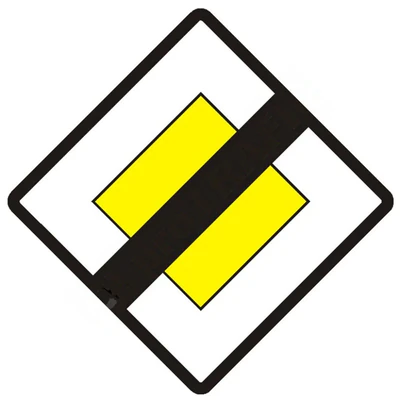
  • End of road with priority
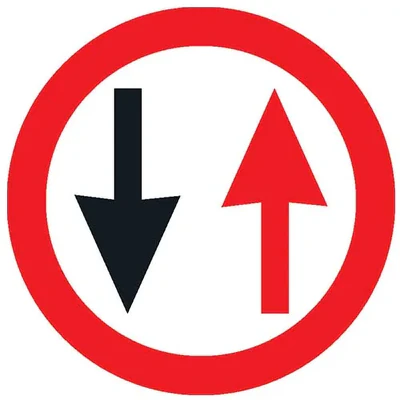
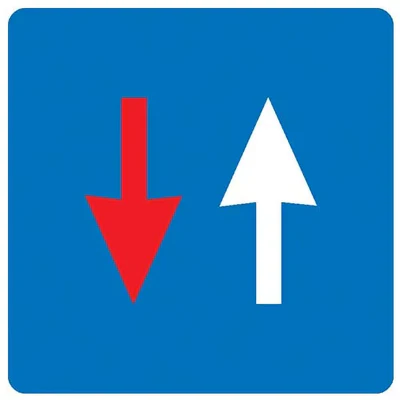
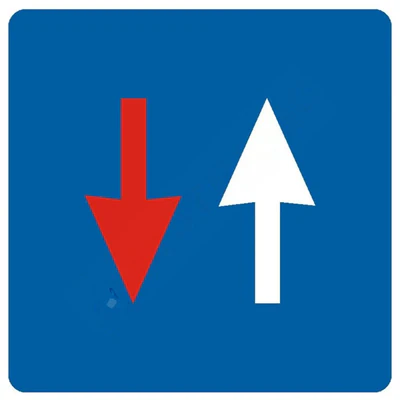
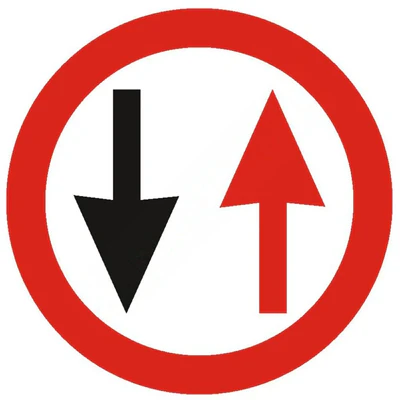
  • Priority for reverse circulation

Technical variants

  • reflector indicators
  • Indications with sheets of Class I, II or III
  • Temporary indicators for construction sites
  • indicators mounted on mobile posts or structures

Depending on use

  • permanent (public guidelines)
  • temporary (works, events)
  • Private (parks, industrial premises)

Differences between options

Reflectorization

  • Class I: reduced traffic
  • Class II: Medium traffic
  • Class III: maximum visibility (roadways, rapid roads)

Material

  • galvanised board – high resistance
  • aluminium – reduced weight, durability

Dimensions

  • small (private spaces)
  • standard (urban roads)
  • large (national roads, motorways)

The choice depends directly on traffic intensity and visibility conditions.


How to choose correctly

The correct choice of a priority indicator makes the difference between an efficient and an unnecessary solution.

Essential criteria

  • type of road (public or private)
  • average speed of movement
  • visibility (day/night)
  • weather conditions
  • legal regulations

Common errors

  • choosing a size too small
  • use an insufficient level of reflection
  • incorrect mounting (height or wrong angle)
  • ignoring the actual traffic flow

Quick Checklist

  •  Is it visible from a distance?
  •  Do they respect the standards?
  •  Is it suitable for the type of road?
  •  Is it mounted right?

Install & start up

Installation shall be carried out in accordance with the rules to ensure maximum efficiency.

General steps

  • choosing the correct position
  • mounting on stable support
  • compliance with the standard height
  • orientation to traffic flow

In practice, a wrong mounting can make the indicator useless, even if it is of quality.


Maintenance & Maintenance

In order to maintain its efficiency, indicators should be checked periodically.

Recommendations

  • regular cleaning
  • check the reflective foil
  • replacement in case of deterioration
  • control of the catch system

Common errors

Field problems

  • location in areas without visibility
  • Lack of correlation with road markings
  • use of non-compliant products
  • disregarding maintenance

Solutions

  • analysis before installation
  • selection of certified products
  • regular checks

Professional recommendations (based on experience)

From the experience of real projects:

  • in intersections with reduced visibility, always use superior reflectorisation
  • in industrial areas, indicators must be dimensioned above standard
  • does not underestimate the importance of positioning – it is as important as the product

Well-chosen and properly-mounted priority indicators significantly reduce operational risks.

In many cases, the difference between a safe system and a dangerous one is given by apparently small details.


Priority indicators are essential for traffic organisation and accident prevention, providing clear rules of movement at any type of intersection.


Why choose Protrafic signs

Choosing the right supplier is as important as choosing the product.

What we offer

  • actual road signage experience
  • products complying with standards
  • Customized technical advice
  • Stocks available for fast delivery
  • support in choosing the right solution

Competitive advantage

  • full range
  • verified quality
  • rapid delivery
  • dedicated support

Discover the full range of priority indicators and choose the right solution for your project.


FAQ – Frequently Asked Questions

What is the priority indicator?

It's a road sign that sets the traffic order.

Where are the priority indicators mounted?

At intersections, exits from secondary roads or conflict-prone areas.

Is the STOP indicator mandatory in certain situations?

Yes, in intersections with reduced visibility or increased risk.

What kind of reflective leaflet should be chosen?

Depends on traffic: Class II or III for good visibility.

Can these indicators be used in private spaces?

Yes, they are frequently used in parking lots or industrial areas.

What is the lifespan of an indicator?

Generally, between 5 and 10 years, depending on the material.

How do they maintain themselves properly?

By cleaning and periodic checks.

What size is recommended?

Depends on the type of road and the speed of traffic.

Can I set up an indicator on my own?

For private spaces, yes; for public roads, authorisation is required.

How do I choose the right indicator?

Analyses the type of traffic, visibility and regulations.


Conclusion

Priority indicators are a key element for traffic safety and organisation, regardless of the context of use.

If you want a correct and sustainable solution, explore the available range and choose the right option for your needs.

  • Choose the appropriate maximum safety indicators
  • See products available now
  • Ask for advice for your project
  • Configure the correct signaling system
  • Discover professional solutions

Subscribe to our newsletter and never miss a promotion

Get our offers and news once a month. You can unsubscribe at any time.
Cookie settings

Choose which categories you accept. Strictly necessary cookies are always active; the others start only with your consent and you can change them at any time. Cookie policy

They make the site work: shopping cart, favourites, customer account sign-in, form security and remembering your cookie choice. They cannot be disabled.

What we store (5)
  • erp-consent · This site · Stores your cookie choice. Duration: 365 days.
  • erpShop.cart · This site · Products in your shopping cart. Duration: until the cart is emptied.
  • erpShop.fav · This site · Products you saved to favourites. Duration: until you delete them.
  • __Host-*_sess · This site · Keeps you signed in to your customer account. Duration: session (12 hours) or 30 days with “Remember me”.
  • __Host-*_csrf · This site · Security: protects account forms against forged requests. Duration: session.

Remembers recently viewed products so you can find them easily. The data stays only in your browser.

What we store (1)
  • erpShop.seen · This site · Recently viewed products. Duration: until you delete them.

Shows us which pages are visited and how the site is used, so we can improve it (Google Analytics).

What we store (2)
  • _ga · Google Ireland Ltd. (Google Analytics) (third party) · Distinguishes visitors for visit statistics. Duration: 2 years.
  • _ga_4009D1RE45 · Google Ireland Ltd. (Google Analytics) (third party) · Keeps the state of the visit session. Duration: 2 years.

Video clips played directly on YouTube (Google). When playing, YouTube can store data in the browser.

What we store (1)
  • YSC, VISITOR_INFO1_LIVE, yt-remote-* · Google Ireland Ltd. (YouTube) (third party) · Video playback and YouTube statistics; only after you start a video. Duration: session – 6 months.
Third-party providers (2)