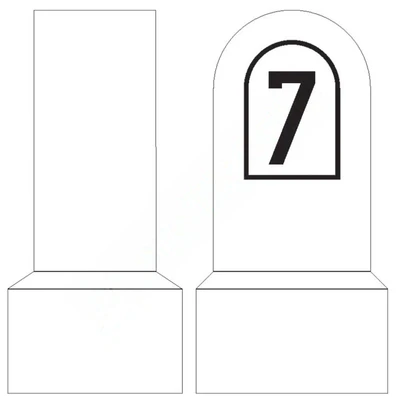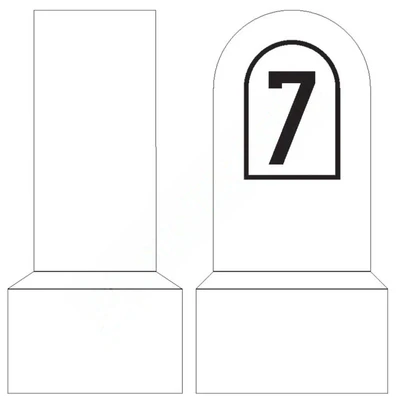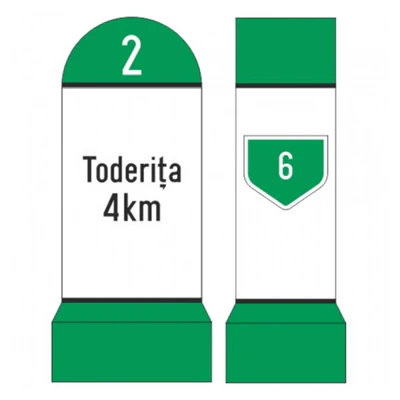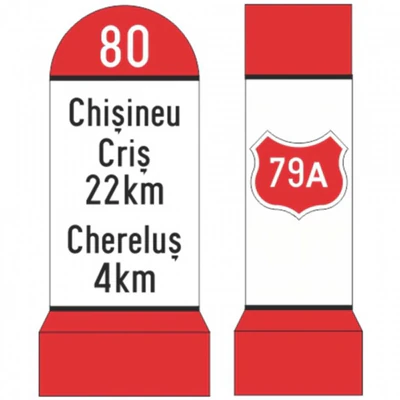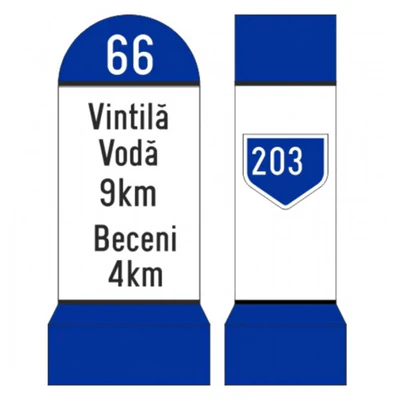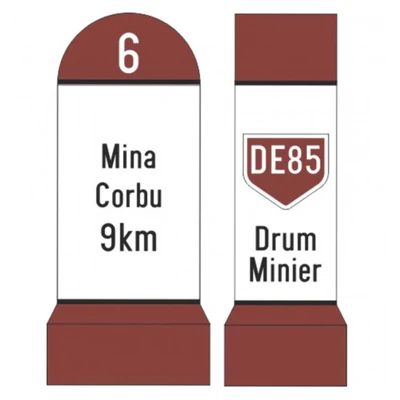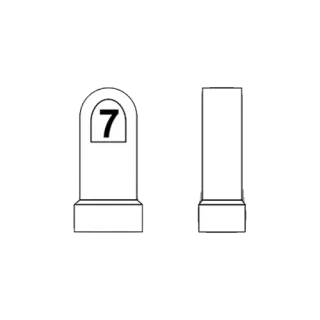
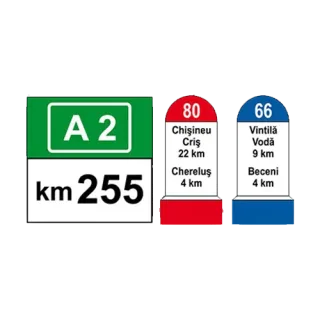
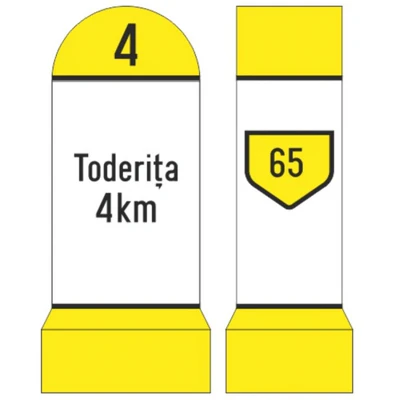
Indicator mileage plastic road communal folie class 1
630,00 lei
In stock at supplier
sup Request a quote – Indicator mileage plastic road communal folie class 1 See options – Indicator mileage plastic road communal folie class 1We use strictly necessary cookies to run the site and, only with your consent, to remember viewed products, for visit statistics and for YouTube video playback. You can change your mind at any time from “Cookie settings” at the bottom of the page. Cookie policy
Technical advice: 0725 404 404 · Fast delivery nationwide · Blog
Vertical signalling includes road signs and terminals that transmit information essential for guidance, safety and traffic control.
630,00 lei
In stock at supplier
sup Request a quote – Indicator mileage plastic road communal folie class 1 See options – Indicator mileage plastic road communal folie class 1210,00 lei
In stock at supplier
sup Request a quote – Plastic hectometric column class 2 See options – Plastic hectometric column class 2190,00 lei
In stock at supplier
sup Request a quote – Hectometric plastic indicator class 1 See options – Hectometric plastic indicator class 1715,00 lei
In stock at supplier
sup Request a quote – Indicator kilometre plastic road national leaf class 2 See options – Indicator kilometre plastic road national leaf class 2We didn't find any products for the chosen filters.
Vertical Signalling is one of the most visible and essential components of road infrastructure, responsible for guiding, warning and informing traffic participants. From road signs to marker and hectometric kilometres, this category covers the essential solutions for public roads, construction sites and private areas. It is intended for authorities, construction firms and road managers who need clear, sustainable and compliant systems. The correct choice of these elements contributes directly to risk reduction and flow of traffic.
Vertical signalling represents the totality of the elements installed above the level of the carousel, with the role of information and traffic regulation.
These include:
Their role is simple, but essential: they quickly transmit visual information easily understood, regardless of traffic conditions.
Vertical signalling is present in almost any area where there is organised circulation:
In practice, these systems are adapted according to the intensity of traffic and the specific risks of each area.
The operation is based on a simple principle: visibility + standardisation + rapid recognition.
A well-chosen indicator shall be observed, understood and respected in a few seconds.
Without these elements, traffic would become chaotic and dangerous.
Their real impact:
The correct integration of vertical signalling makes the difference between a safe and a risky road.
The correct use of these solutions brings direct benefits:
The right choice depends on a few key differences:
A highway indicator is not equivalent to one for a parking lot.
The correct assembly is as important as the product in rails.
General steps:
In construction sites, the installation must be fast, but safe.
For long-term efficiency:
Neglecting maintenance significantly reduces the efficiency of the system.
In practice, they frequently occur:
Solution: proper planning and compliance.
In real projects, the difference is made in detail:
An efficient system means not only installation, but also constant adaptation.
Vertical signalling ensures clear, safe and efficient traffic guidance through durable indicators and terminals, adapted to each type of road.
Road signalling experience means more than products.
We offer:
For a complete solution, explore:
It is the system of indicators and terminals installed above the carousel for traffic guidance.
The kilometre terminal indicates large distances, and the hectometre provides detailed location in short segments.
On all public roads and in areas where traffic needs to be regulated.
Depending on the speed of movement and distance from visibility.
Galvanized steel and certified reflective sheets.
In normal conditions, between 5 and 10 years or more, depending on the environment.
Yes, to maintain visibility and safety.
Yes, including in parking lots, industrial or commercial spaces.
Improper assembly, reduced visibility and choice of non-compliant products.
Some temporary systems can be reused if they are in good condition.
Vertical signalling is a key element for traffic safety and organisation, regardless of the type of road or project.
If you need reliable and well-chosen solutions, explore the available range and choose the right option for your needs.
Get our offers and news once a month. You can unsubscribe at any time.