Technical advice: 0725 404 404 · Fast delivery nationwide · Blog

Protrafic.ro
Offers
0725 404 404 Contact

For companies and public institutions: purchasing via SEAP / SICAP details

Product categories
OffersSee discounts ›

Sign posts

Flags for indicators are metal or mobile structures that support road signs and ensure the visibility and safety of traffic.

4 products

Positions for indicators is the basic element supporting any road signalling system, from simple indicators to complex panels. Without a properly chosen and mounted support, even the most visible sign loses its efficiency. This category is dedicated to authorities, construction companies, road managers and private companies that need safe, sustainable and real-world solutions. The correct choice of a post is not only of size, but also of strength, stability and compatibility with the type of signalling used.


What are the pillars for indicators

Stables for indicators are Support structures used for mounting and fixing road signs, information panels or other signalling elements.

They may be made from:

  • galvanized steel
  • Composite materials (rather)

Their main role is to ensure:

  • the correct position of the indicator
  • stability in difficult weather conditions
  • optimal visibility for traffic participants

Without adequate support, any signalling system becomes ineffective or even dangerous.


Where they are used

Flags for indicators are used in a wide range of contexts:

Public Roads

  • national roads and county
  • urban streets
  • Spinal intersections and senses

Private and industrial areas

  • commercial parking
  • Logistical deposits
  • Industrial halo

Construction and temporary works

  • infrastructure works
  • Road interventions
  • areas with diverted traffic

Other apps

  • tourist signage
  • delineate pedestrian areas
  • Informative indicators in private spaces

How it works

The operation is simple, but extremely important: a position must be Take the weight of the indicator and resist external forces (wind, vibration, light impact).

The process involves:

  1. Fixed in the ground (by concrete or anchoring)
  2. Installation of the catch system
  3. Attachment of the indicator or panel

A well chosen system:

  • keep the indicator straight and stable
  • reduces the risk of rotation or fall
  • ensures long-term sustainability

Why They Are Important

Flags for indicators are not just a support – they are a critical component for road safety.

Inadequate support may lead to:

  • Declined or inclined indicators
  • reduced visibility
  • accident risk

On the other hand, a correct solution offers:

  • safety for participants in traffic
  • compliance with technical standards
  • extended life span

In practice, choosing a good post reduces subsequent interventions and maintenance costs.


Advantage

The use of quality posts brings clear benefits:

  • corrosion resistance (galvanizing)
  • stability under strong wind conditions
  • quick and efficient assembly
  • compatibility with various types of indicators
  • long duration of operation
  • reduced long-term costs

Types/Variations of posts for indicators

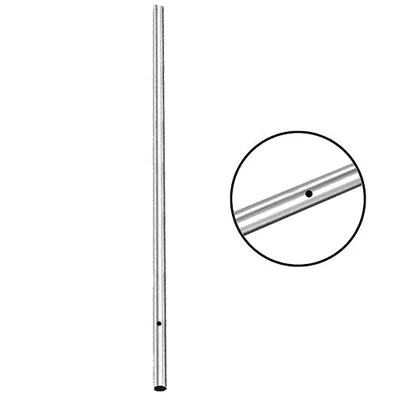
Tube posts (pipe)

  • most commonly used
  • Available in different diameters
  • suitable for most applications

Posts for large panels

  • larger diameter
  • increased resistance
  • used for complex signalling

Consoles for indicators

  • allow side mounting or over the carousel
  • used in large intersections

Mobile posts

  • Easy to move
  • ideal for temporary work

Steps for indicators

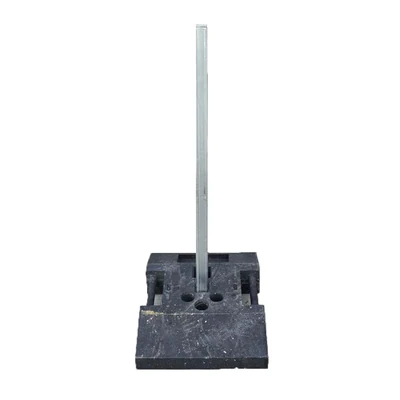
  • stability without soil fixation
  • used on construction sites
  • Extremely fast mounting

Differences between options

Fix vs Mobile

  • fixed pillars are permanent
  • mobile are temporary and flexible

Diameter and thickness

  • influences resistance
  • essential for large panels

Type of assembly

  • in concrete (sustainable)
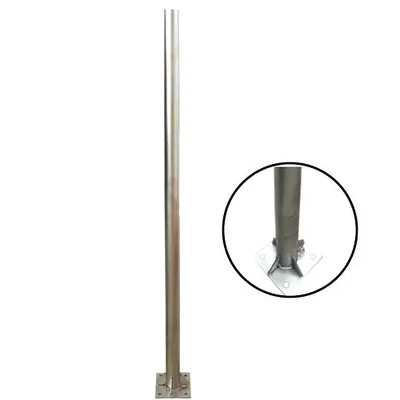
  • with flange (faster)

Material

  • galvanized steel = professional standard

How to choose correctly

The right choice depends on a few key factors:

1. Type of indicator

  • size
  • weight
  • wind exposure

2. Location

  • urban area vs open road
  • intense traffic vs. reduced

3. Type of assembly

  • permanent or temporary

4. Environmental conditions

  • wind
  • humidity
  • Extreme temperatures

Quick Checklist

  •  small indicator → standard post
  •  large panel → post gross / console
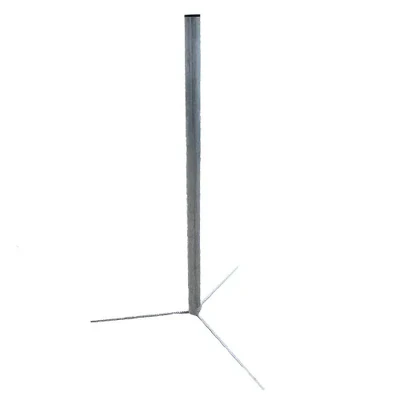
  •  temporary works → tripod or mobile post
  •  high exposure → galvanized material

Common errors

  • choice of a too small diameter
  • ignoring wind conditions
  • Surface mounting
  • Lack of attachments

Install & start up

The standard process includes:

  1. Location choice
  2. Foundation dig
  3. Fixing of the pole (peton or anchor)
  4. Vertical verification
  5. Mounting of the indicator

Useful tips:

  • comply with the minimum depth of fixation
  • use compatible catch systems
  • check stability before use

Maintenance & Maintenance

For an optimal lifespan:

  • periodically check verticality
  • controls the catch systems
  • inspect the corrosion
  • replace worn components

An annual control can prevent major problems and additional costs.


Common errors

  • assembly without adequate foundation
  • use of incompatible accessories
  • undersize the pole
  • disregarding technical rules

Solution: correct choice + professional assembly.


Professional recommendations (from the field)

From real experience:

  • on roads exposed to wind, diameter matters more than it seems
  • for temporary work, tripods reduce installation time by up to 70%
  • galvanized pillars last for years without intervention

In large projects, the correct choice of support directly influences long-term safety and costs.


Indicator posts are essential solutions for supporting road signs, providing stability, visibility and safety under any traffic conditions.


Why choose our solutions

We are working on real needs in the field, not just theoretical specifications.

Competitive advantage

  • experience in signalling projects
  • products complying with standards
  • stocks available quickly
  • actual technical advice
  • solutions for any type of project

What you get concretely

  • support in the right choice
  • rapid delivery
  • sustainable products
  • guaranteed compatibility


FAQ – Frequently Asked Questions

What diameter should a position for the indicator have?

Depends on the size of the indicator. For standard signs, the usual diameters are enough, but the large panels require thicker posts.

Can the concrete-free pillars be mounted?

Yes, in the case of flanged systems or for temporary applications, but for permanent mounting concrete is recommended.

What is the difference between fixed and mobile?

The fixed pillar is permanent, and the mobile pillar is easy to move and used in temporary works.

What material is the most resistant?

Galvanised steel provides the best corrosion protection and a long lifespan.

What are the footbridges for the indicators?

There are portable supports, used especially on construction sites, where it is not possible to fix in the ground.

How do I choose a position for a large panel?

It is important the diameter, thickness and type of assembly. Usually, more solid posts or even consoles are needed.

How long is the assembly?

From a few minutes (for tripods) to a few hours (for fixed concrete mounting).

Can the pillars be reused?

Yes, especially the mobile ones or the ones mounted with the flank.

What accessories are needed?

Collars, flanges, screws and fastening systems compatible with the indicator.

How do I maintain the pillars?

By regular checks and replacement of worn components.


Conclusion

The correct choice of a position for indicators means more than just support – it means safety, sustainability and long-term efficiency.

If you want to make an informed choice, explore the available range and identify the solution that fits perfectly with your project.

  • Discover full range of posts and accessories
  • Choose the right solution for your project
  • See products available for quick assembly
  • Consult options for temporary work
  • Request appropriate recommendation for your application

Subscribe to our newsletter and never miss a promotion

Get our offers and news once a month. You can unsubscribe at any time.
Cookie settings

Choose which categories you accept. Strictly necessary cookies are always active; the others start only with your consent and you can change them at any time. Cookie policy

They make the site work: shopping cart, favourites, customer account sign-in, form security and remembering your cookie choice. They cannot be disabled.

What we store (5)
  • erp-consent · This site · Stores your cookie choice. Duration: 365 days.
  • erpShop.cart · This site · Products in your shopping cart. Duration: until the cart is emptied.
  • erpShop.fav · This site · Products you saved to favourites. Duration: until you delete them.
  • __Host-*_sess · This site · Keeps you signed in to your customer account. Duration: session (12 hours) or 30 days with “Remember me”.
  • __Host-*_csrf · This site · Security: protects account forms against forged requests. Duration: session.

Remembers recently viewed products so you can find them easily. The data stays only in your browser.

What we store (1)
  • erpShop.seen · This site · Recently viewed products. Duration: until you delete them.

Shows us which pages are visited and how the site is used, so we can improve it (Google Analytics).

What we store (2)
  • _ga · Google Ireland Ltd. (Google Analytics) (third party) · Distinguishes visitors for visit statistics. Duration: 2 years.
  • _ga_4009D1RE45 · Google Ireland Ltd. (Google Analytics) (third party) · Keeps the state of the visit session. Duration: 2 years.

Video clips played directly on YouTube (Google). When playing, YouTube can store data in the browser.

What we store (1)
  • YSC, VISITOR_INFO1_LIVE, yt-remote-* · Google Ireland Ltd. (YouTube) (third party) · Video playback and YouTube statistics; only after you start a video. Duration: session – 6 months.
Third-party providers (2)