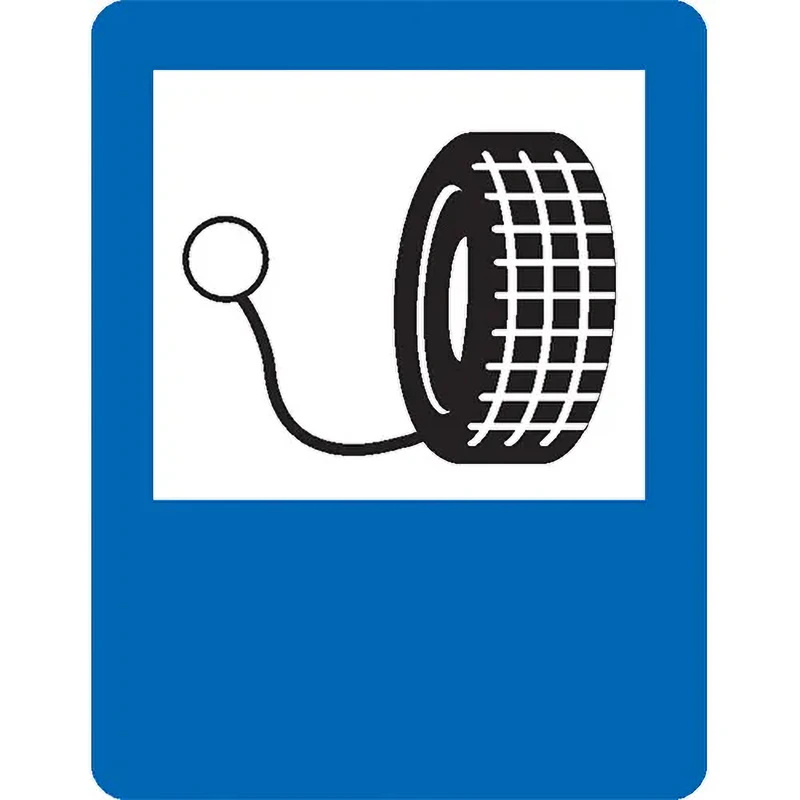
Road sign G17 – signaling for vulcanisation and tire service
In commercial and urban areas, the clear signaling of vulcanisation workshops contributes to the rapid orientation of drivers to maintenance points for tyres and wheels. Road indicator G17 Vulcanisation facilitate the identification of services specialised in the repair and exchange of tyres.
This indicator is recommended for:
- vulcanization;
- services of tyres;
- car workshop;
- car maintenance centres;
- commercial parking;
- roadways;
- communitarian roads.
Effective reporting contributes to:
- rapid identification of vulcanisation workshops;
- the orientation of participants to traffic;
- the organisation of commercial zones;
- increasing the visibility of service points.
What Traffic Participants Need to Know
Road indicator G17 Vulcanisation indicate the existence of a nearby tyre vulcanisation or service workshop.
Metallic construction for long-term operation
The indicator is made of edged metal, designed for professional outdoor use and high resistance to environmental and traffic conditions.
Construction provides:
- high rigidity;
- mechanical strength;
- very good stability;
- long-term exploitation.
The surface shall be protected by electrostatic paint for:
- anti-rorosive protection;
- UV resistance;
- rain and weather resistance;
- uniform and professional finishing.
Class 1 reflective sheet for high visibility
The indicator shall be made of Class 1 reflective sheets recommended for local infrastructure and commercial areas.
Advantages of reflecting foil:
- very good visibility day/night;
- high contrast;
- rapid identification in traffic;
- resistance to external factors;
- long-term exploitation.
Class 1 folia is recommended for:
- localities;
- roadways;
- communitarian roads.
Size 650x500 mm for effective orientation
Size of 650x500 mm provides good visibility and allows rapid identification of the indicator in traffic.
This dimension contributes to:
- rapid observation;
- very good legibility;
- effective guidance;
- compatibility with standard assembly.
Catching system included
The indicator includes the post-metallic-compatible catch system with the diameter of 48 mm.
System benefits:
- rapid installation;
- secure positioning;
- high stability;
- long-term safe exploitation.
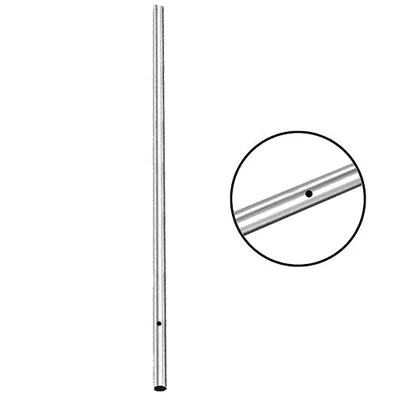
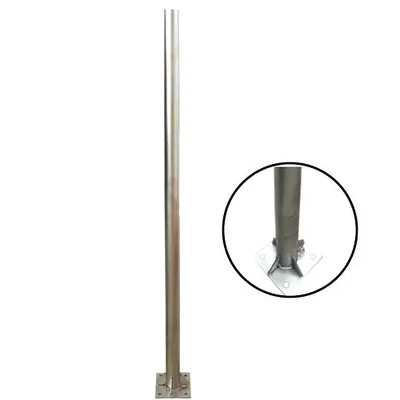
Support pillar not included and can be purchased separately.
Manufactured in accordance with STAS 1848/2024
The indicator is made according to the standard STAS 1848/2024 and comply with the current requirements for professional road signs.
The product shall benefit from:
- EC type-approval;
- a declaration of conformity;
- performance statement;
- quality and technical documentation.
Commercial benefits
- Professional indicator for vulcanisation
- Size 650x500 mm
- Reflective sheet class 1
- Excellent visibility day/night
- Boundary metal construction
- Electrostatic anti-rosing paint
- Exterior resistance
- Catching system included
- Compatible with post Ø48 mm
- Fast and safe assembly
- Recommended for commercial areas and car services
- EC approval
- According to STAS 1848/2024
- Ideal for signaling car services
We recommend that you:
FAQ
What does the G17 signify?
Indicator G17 indicates the existence of a vulcanisation or service workshop for tyres.
Where is the indicator used?
It is used in the vicinity of volcanoes and workshops specialised in service for tyres.
What size does the indicator have?
The indicator is 650x500 mm in size.
What type of reflective leaflets do you use?
The model is made of class 1 reflective sheets.
Is the catch system included?
Yes, the product includes the catch system for the post Ø48 mm.
Does the indicator meet current standards?
Yes, the product is EC-approved and manufactured in accordance with STAS 1848/2024.
Is the pillar included?
No, the stake is sold separately.
Road indicator G17 Vulcanisation inform traffic participants of the existence of a nearby tyre workshop or service. Manufactured from edged metal, with reflecting sheet class 1 and size 650x500 mm, the indicator is recommended for localities, county roads and communal roads and complies with the STAS 1848/2024 standard.