Tactile marking for visually impaired people STOP
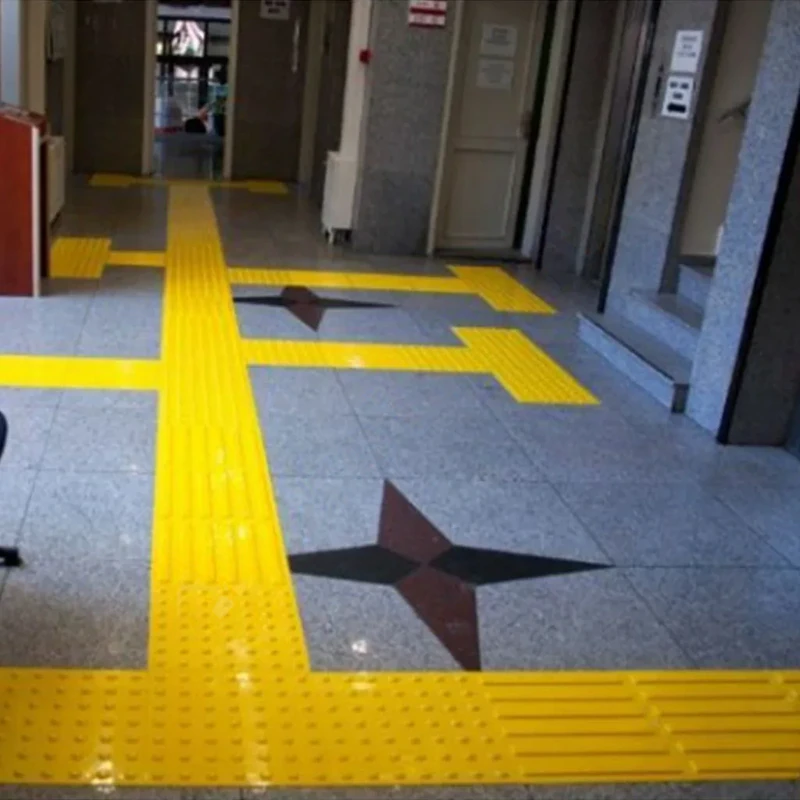
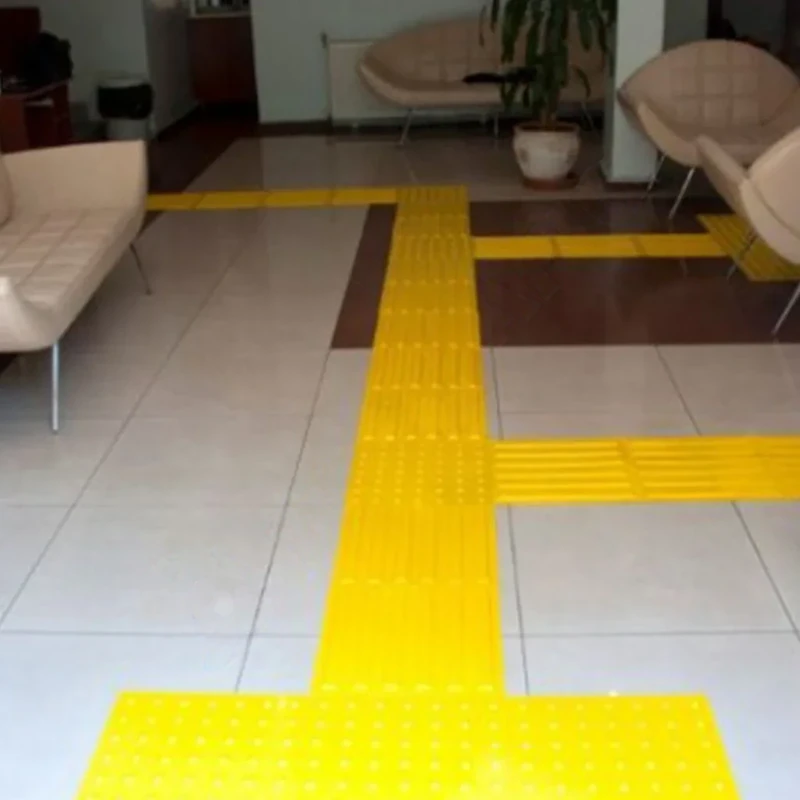
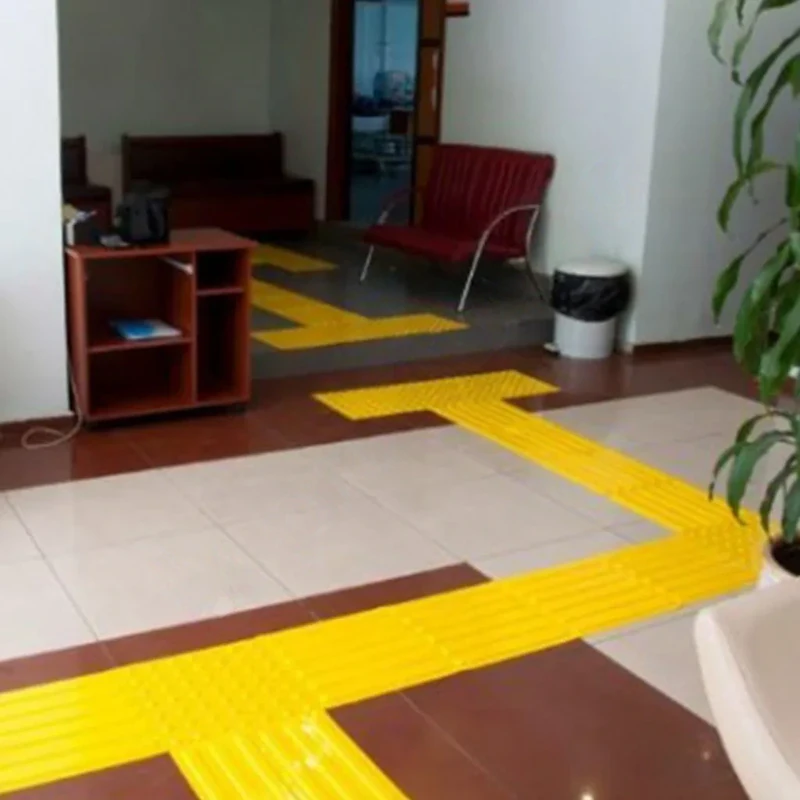
In modern urban accessibility projects, tactile systems are an essential element for the safety and orientation of people with impaired vision. Warning tactile markings shall be used to signal areas where users must show increased attention, such as proximity to stairs, pedestrian crossings, piers or other risk areas.
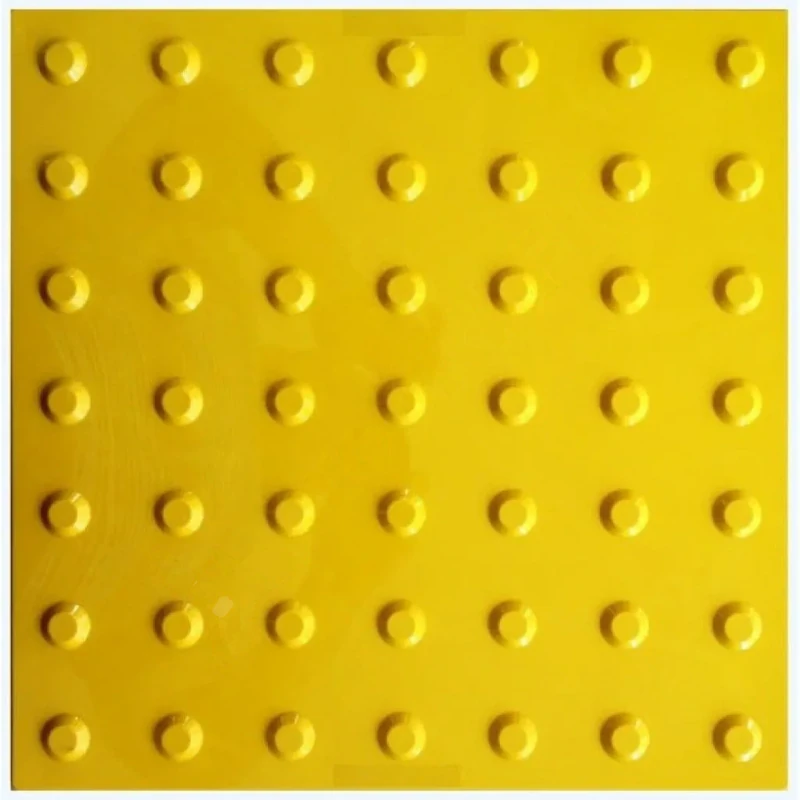
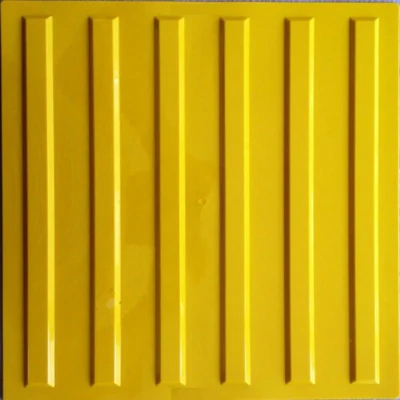
Touch mark for visually odded people STOP is provided with high-tactile points that can be quickly identified with the touch stick or by plantar perception. Thus, users receive a clear warning before level changes or hazardous areas.
Version 400x400 mm offer an extended tactile surface and is recommended for professional accessibility projects in:
- public institutions;
- commercial centres;
- hospitals;
- schools;
- universities;
- airports;
- rails;
- transport stations;
- administrative buildings;
- commercial spaces;
- Pedestrian areas.
Thanks to the construction of durable rubber and anti-slip surface, the product provides high durability even in areas with intense pedestrian traffic.
What is a STOP touch mark for visually odded people
One tactile warning marking is a high-point touch plate used to warn people who are not seeing about the proximity of an area requiring additional attention.
These tactile markings are used for:
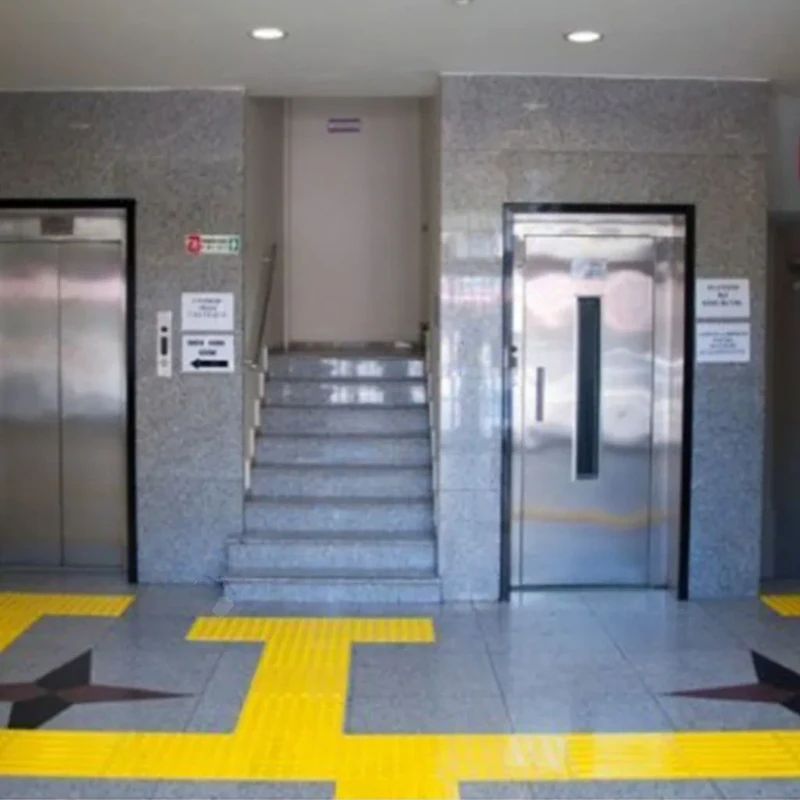
- warning before stairs;
- flagging the margins of the perimeters;
- the approach of pedestrian crossings;
- the delimitation of hazardous areas;
- changes in direction;
- obstacles;
- pedestrian intersections.
STOP touch systems are an important component in modern pedagogical accessibility and safety projects.
Technical characteristics of the STOP touch marking 400x400 mm
Manufactured from resistant rubber
The product is made of durable rubber, intended for professional use in areas with intense pedestrian traffic. The material provides good wear resistance and excellent operating behaviour.
Dimensions and specifications
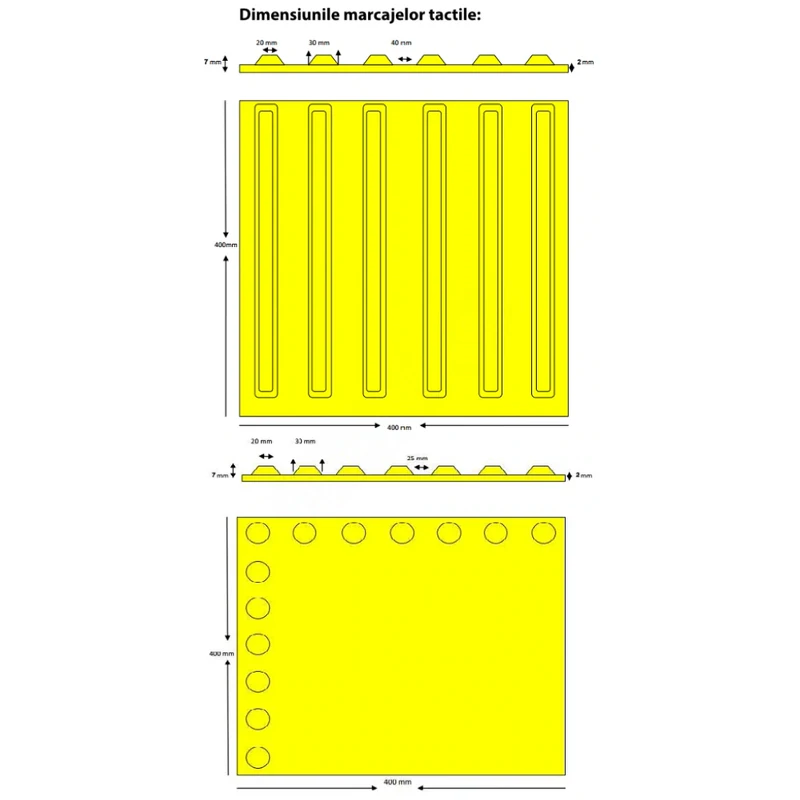
- Size plate: 400 x 400 mm
- Height of touch points: 8 mm
- Weight: 0.7 kg
- Material: rubber
- Colour: yellow
The enlarged dimension offers an extended touch zone and a more efficient perception in the circulated spaces.
Anti-slip touch surface
Highlighted touch points are designed for:
- rapid detection;
- effective warning;
- high grip;
- safety in movement;
- comfortable use.
High visibility
The yellow colour provides excellent visual contrast and allows the rapid identification of warning tactile areas.
Advantages of using STOP tagging
Improved Pedestrian Safety
People with impaired vision can quickly identify the proximity of an area requiring additional attention.
Ideal for intense pedestrian traffic
The product is designed for use in daily circulation.
High wear resistance
The rubber material offers excellent durability in operation.
Effective Tactile Surface
Touchpoints allow clear perception and early warning.
Reduced maintenance
The marking is easy to clean and requires minimum maintenance.
Important to know about mounting
This tactile marking for visually impaired people STOP:
- is not self-adhesive;
- does not include the catch system;
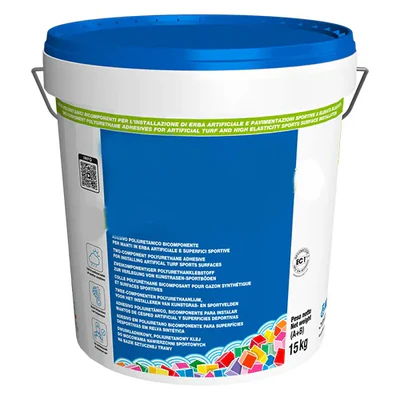
- requires the use of a professional adhesive compatible with the mounting surface.
The adhesive shall be chosen according to the type of surface:
- concrete;
- plaster;
- granite;
- asphalt;
- stone;
- industrial pardoseli.
For a safe and sustainable fixation, we recommend the use of professional adhesives for intensive pedestrian traffic. In our range of products you find and adhesive for touch markings, compatible with internal and external use.
Where to use STOP tagging
Passes of pedestrians
The tactile markings warn users before crossing the carousel.
Transport terminals and terminals
These products are used to signal the margins of the pereans and risk zones.
Steps and ramps
Touchpoints warn about level changes.
Public institutions and shopping centres
Touch markings contribute to the accessibility of modern spaces.
Pedestrian areas and sidewalks
Touch products improve safety and pedestrian orientation.
Difference between STOP and directional tagging
STOP touch markings
They use high-profile touchpoints and have a warning role.
Directional touch markings
Use linear tactile ribs to guide the travel route.
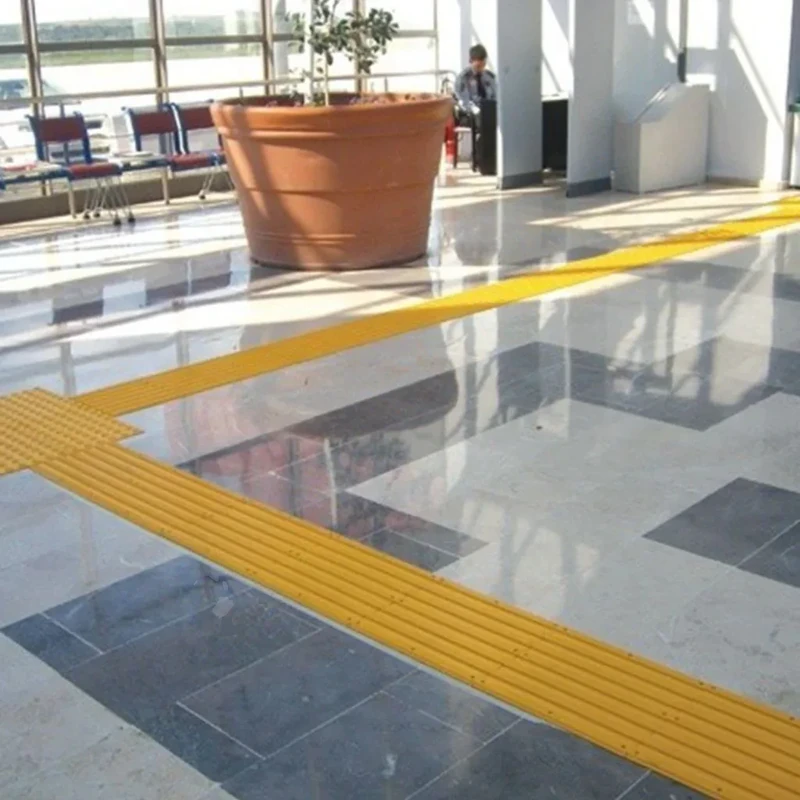
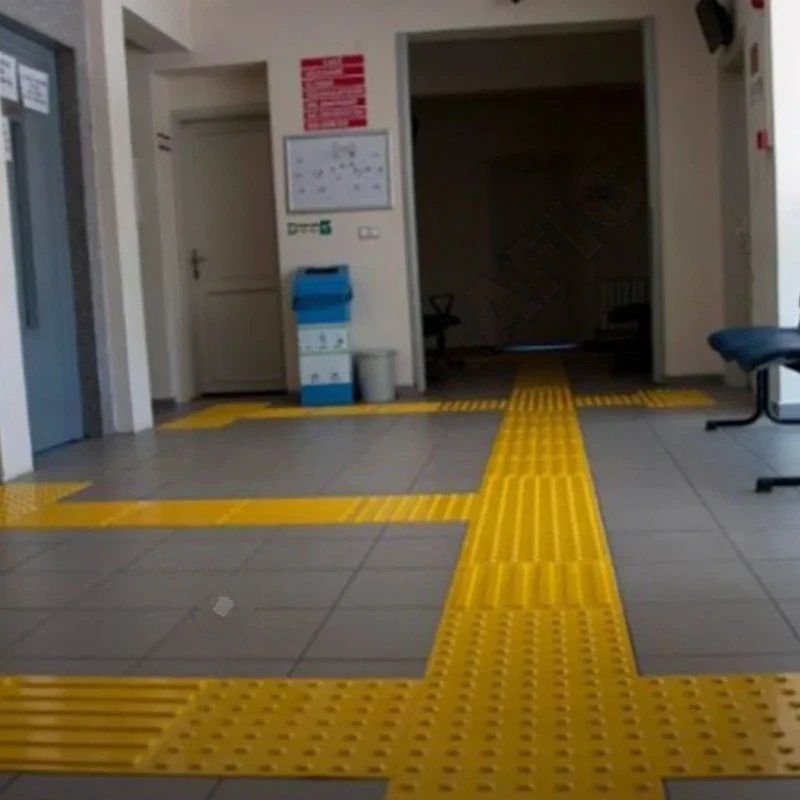
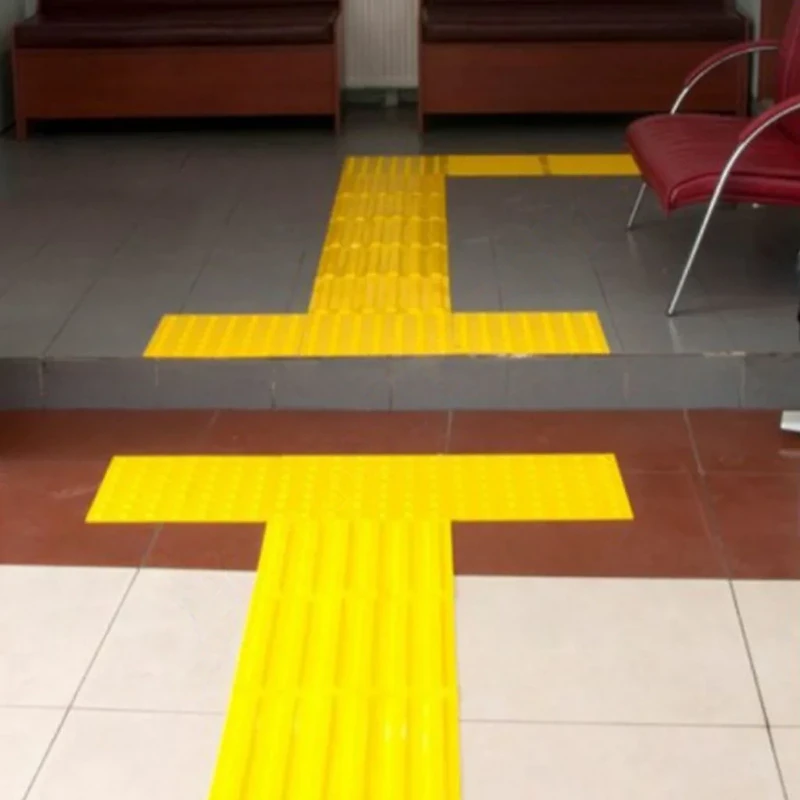
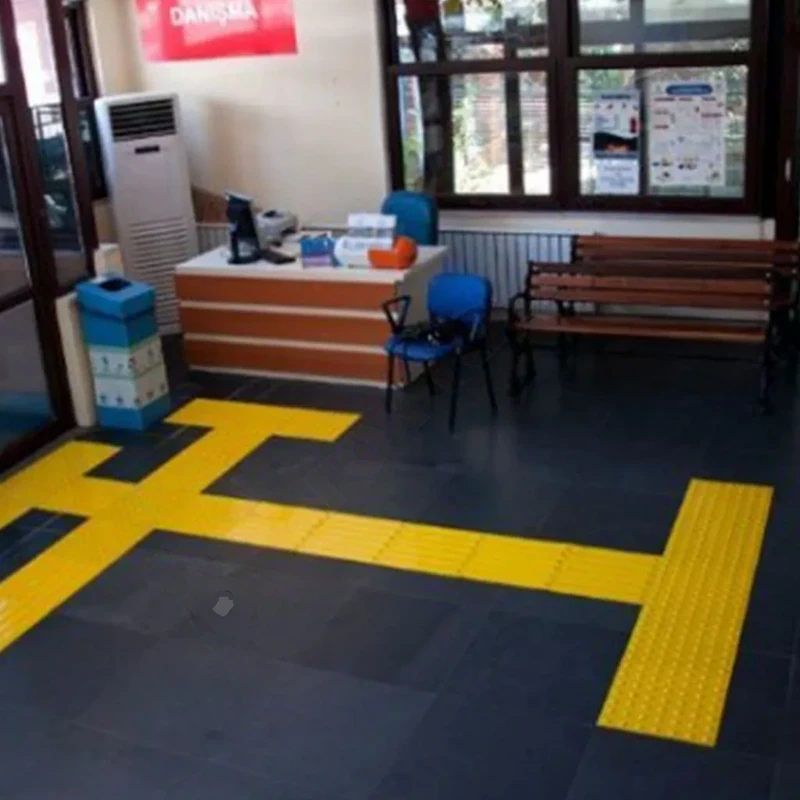
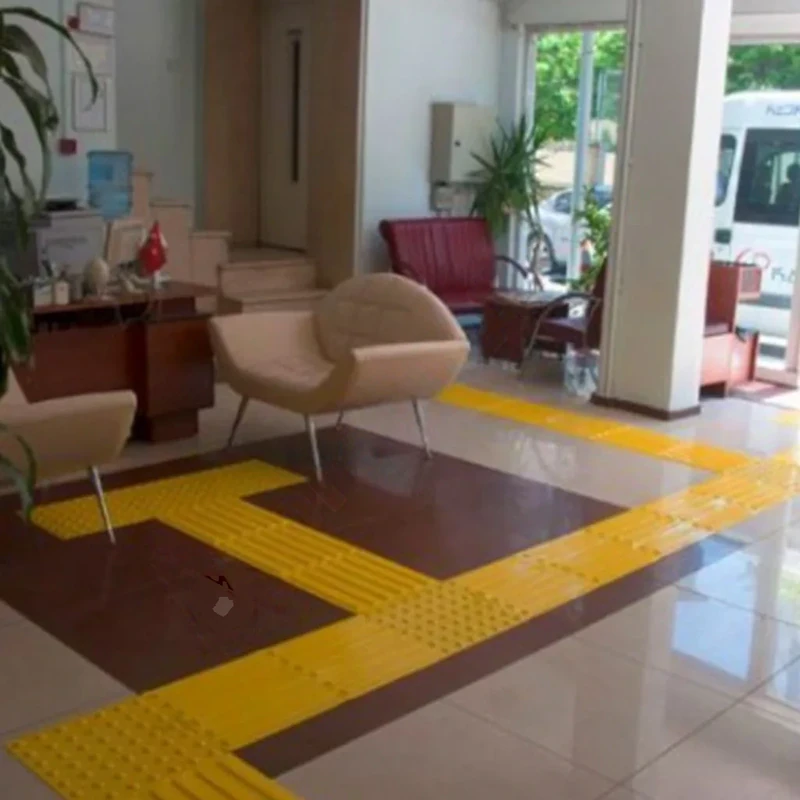
In professional projects, the two types are used together for orientation and complete safety.
Professional solution for modern accessibility
One tactile marking for visually impaired people STOP contribute to:
- effective warning;
- Pedestrian safety;
- urban accessibility;
- intuitive guidance;
- compliance with modern standards.
Thanks to the robust construction and anti-slip touch surface, the product is a durable solution for professional accessibility projects.
Commercial benefits
- Manufactured from resistant rubber
- Visible yellow colour
- Size 400x400 mm
- Touchpoints 8 mm
- Weight 0.7 kg
- Anti-skid surface
- Effective tactile warning
- Ideal for intense traffic
- Internal/exterior fit
- High wear resistance
- Compatible with urban accessibility
- Not self-adhesive
- Assembly with professional adhesive
- Adhesive available in range
- Professional Pedestrian Safety Solution
Explore and:
FAQ
What role does the STOP touch mark play?
The STOP tactile marking warns people with impaired vision of the proximity of a dangerous area or of a change in path.
What material is the product made of?
The product is made of resistant rubber, intended for use in areas with intense pedestrian traffic.
What dimensions does the touch plate have?
The plate is 400 x 400 mm in size and the touch points are 8 mm in height.
What is the weight of the product?
The weight of the tactile marking is approximately 0.7 kg.
This self-adhesive?
No, the product is not self-adhesive and requires professional adhesive for assembly.
Does it include the adhesive in the package?
No, the adhesive is purchased separately. In our offer you find and adhesive compatible for professional assembly.
Can it be used outdoors?
Yes, the product is recommended for both indoor and outdoor use.
Touch mark for visually impaired people STOP 400x400 mm is made of anti-slip yellow rubber and is used for tactile warning in the vicinity of hazardous areas, stairs or pedestrian crossings. Ideal for public spaces and intense pedestrian traffic, the product offers safety and efficient accessibility.