Parapet catadio: how to choose the right model
At night, a non-reflective parapet is easily confused with the darkness around it. A parapet retro-reflector turns the light of the headlamps to the driver and shows him from time to time the road line, especially in curves, bridges and portions without public lighting or with frequent fog.
In short: choose the support after the parapet, metal or concrete, then the mono or bifacial version after the number of senses passing by it.
Do you need help choosing?
Tell us what you need and we'll send you the offer on the same working day.
The parapet reflectors work without energy and without cables, so they remain one of the simplest night guide measures. However, it counts for the support according to the type of parapet, the orientation towards traffic and the regular interval between the parts. Regular cleaning and replacement of broken parts retains the long-term effect, and a night test quickly shows the gaps in the line. See metal and concrete parapet models in category Reflective retro-reflectors.
A parapet retro-reflector makes visible, at night, a barrier that otherwise gets lost in the dark. The light of the headlights reaches the reflector and returns to the driver. Thus, the driver sees the parapet line and curve trajectory from time to time.
How a parapet retro-diopter works
The catadioptre has no battery and no LEDs. Instead, use micro-presses or optical structures that send the light back to the source. Therefore, the effect appears exactly in the driver's eyes, not in the side. In other words, the reflector works as long as it receives light from the headlamps.
Therefore, a parapet retro-reflector brings visibility without energy costs and without cables. At the same time, the play has no moving components. Thus, maintenance is limited to cleaning and replacement of broken parts.
The reflector catadio on the metal or concrete parapet?
The first choice criterion is the type of parapet. The support differs, and a piece designed for metal doesn't get right on the concrete. Category Reflective retro-reflectors cover both situations.
For the metal parapet
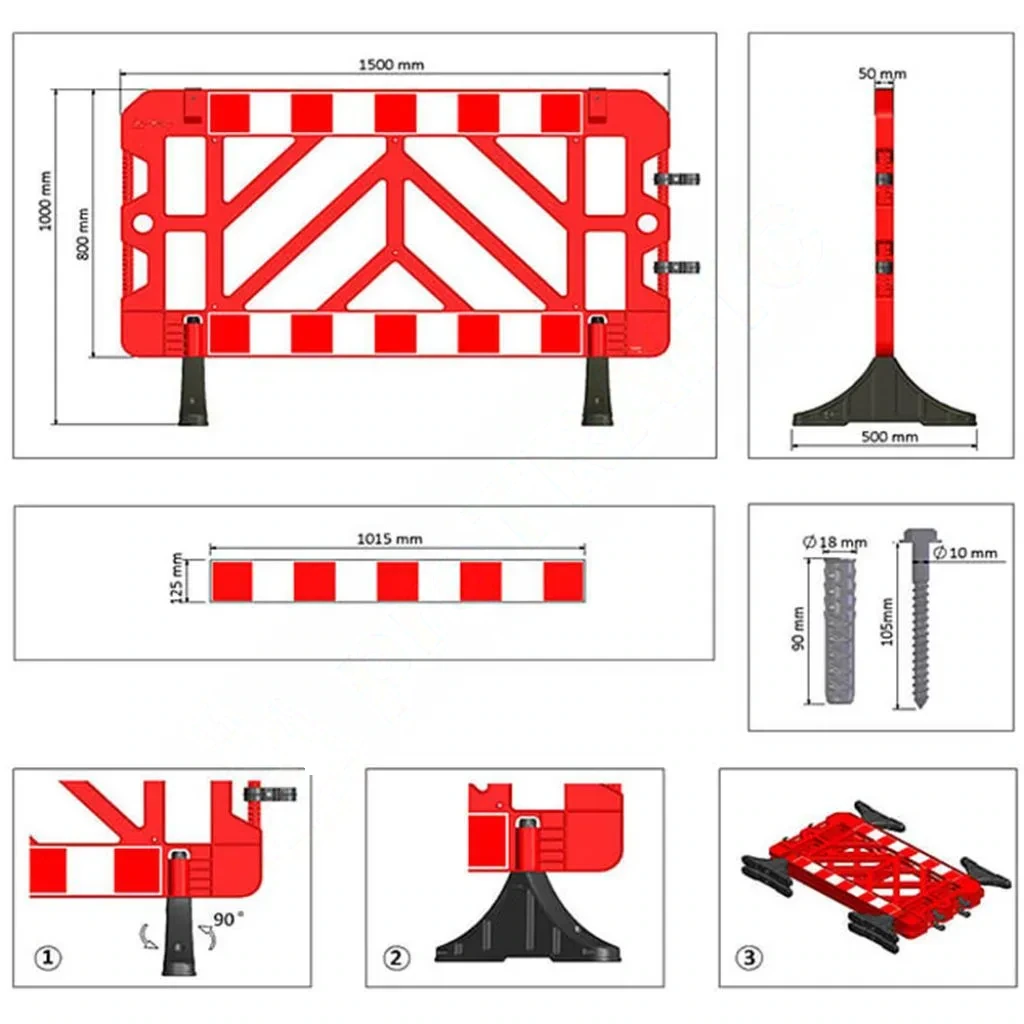
Model reflector retro-reflector from the offer address to the metal parapets on roads and bridges. Thus, you fix it directly on the parapet, at regular intervals. At the same time, this parapet retro is also marking the curves, where the driver needs additional guidance.
For New Jersey Concrete Parapet
New Jersey concrete parapets often appear on highways, bridges and separator meanings. Therefore, the dedicated support grabs the piece on the parapet profile, without improvisations. On concrete, the offer includes several variants, all with dedicated support:
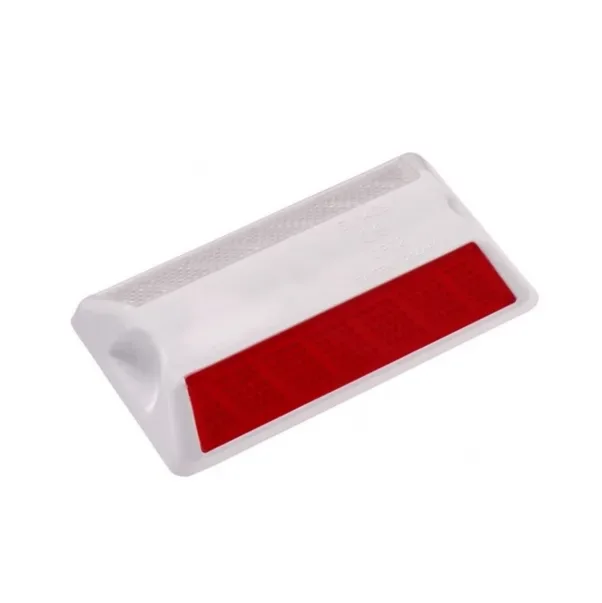
- Supported, monofacial, white catadioptre, for one direction only.
- Version red monofacial, with the same catch.
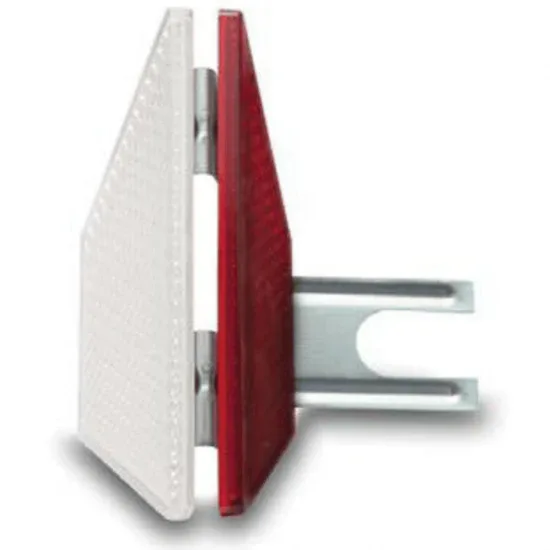
- Model bifacial type L, visible from both senses.
- Reflectorizing plate of the Omega type, bifacial, for side mounting.
So, you choose a retro-reflector for the concrete parapet by the number of senses passing by it.
Monofacial or bifacial: how you decide
A monofacial parapet retro-reflector reflects light in one direction. For example, it fits on a margin parapet, on a one-way street. Instead, a bifacial model reflects both directions. Therefore, you use the parapets that separate the walking senses, where the cars come from both sides.
The colour, white or red, holds the road signage scheme. Therefore, the project shall be established on public roads in accordance with the administrator and the rules in force. The official texts are consulted on National legislative portal.
How you check the effect on the field
The simplest test you do at night, from the car. First, you walk through the short phase of the section where you have mounted each parapet retro-reflector at the usual speed of the road. Then, you see if the reflector line appears continuous or has gaps. For example, a missing piece in a curve feels right away, because the line breaks right where the driver needs it.
In addition, repeat the test on rain or light fog, if you have the opportunity. Thus, see how reflection behaves under the harshest conditions. Therefore, a parapet retro-reflector that seems enough day shows its real role only at night.
Where a parapet retro-diopter matters most
- Narrow curves, where the parapet indicates the direction before marking.
- Bridges and passages, with weak lighting or not at all.
- Roads out of town, without public lighting.
- Areas with frequent fog or heavy rains.
- Ramps and exits from underground parking lots with concrete parapet.
In all of these places, a parapet retrofitter completes the marking on the roadway. Especially in winter, when the snow covers the lines, the reflectors on the parapet often become the main visual guide.
How to mount a reflective retro-reflector
First, you set the range between reflectors, often in curves and rarely in alignment. Then you mount all the pieces to the same height, so the light line seems to continue. In addition, you are directing the reflective face towards approaching traffic.
Later, check the reflectors periodically. Dust, mud and salt on the road reduce the effect a lot. You also replace broken parts after accidents or snowfall. Thus, a parapet retro-diopter retains its role throughout its use.
Reflectors, buttons and markers: how to combine them
The parapet marks the edge, but the carousel also needs landmarks. Therefore, combine parapet reflectors with markings and with Reflective buttons on the axis or edge of the band. Where the light of the headlights does not arrive in time, such as the curves tightened without illumination, add solar markers with its own light. In other words, each element covers another level of visibility.
- The parapet reflector shows the lateral limit of the road.
- The reflective button contours the treadmill.
- The solar marker is actively signaling the most dangerous areas.
However, a parapet retro-reflector remains the basis of the system, because the parapet already exists and only needs visibility.
Common questions: parapet retrodiopter
Does he need power?
Nope. The catadioptre reflects light from the headlights, so it doesn't consume energy.
Can I put a metal pattern on the concrete?
We don't recommend it. A metal parapet retro-reflector has another support, and the improvised catch on the concrete gives way to vibrations.
When do I choose the Omega plate?
The Omega plate matches when you want a reflective surface visible in both directions, on the side of the concrete parapet.
Does it matter the color of the reflector?
Yeah. The color transmits information about the part of the road, which is why you choose it after the signal scheme of the project, not after preference.
How often do I clean a reflective retro?
Depends on the road. For example, near fields or yards, dust quickly covers a parapet retro-diopter, so check more often, and winter controls after each snowfall.
See all variants in category Reflective retro-reflectors. The Protrafic.ro team helps you choose, by the type of parapet and the senses of circulation. Thus, each parapet retro-diopter reaches the right support.