Hazard warning indicator: types and location
A hazard warning indicator shall, from a glance, state the risk in the following area: electric current, laser rays, crushing or snowfall. Its efficiency depends on the right choice and the place where you build it. Below you see the main types and practical rules of location.
In short: start from the risk assessment, choose the sign for the real risk and put it ahead of the risk area, at the level of the view.
Do you need help choosing?
Tell us what you need and we'll send you the offer on the same working day.
A hazard warning indicator shall only work if it describes the actual risk and is seen in time. Start from the risk assessment, choose the right sign for electric current, laser, crushing, vehicles or snowfall and mount it before the area, at the viewing level. Combine it with signs of prohibition and obligation, then periodically check their condition. Find over a hundred models in the category warning safety indicators.
A warning signal for danger tells the man, from a glance, what risk awaits him in the next area. Thus, you earn a few seconds of attention before a dangerous situation. In addition, the sign completes the instruction, does not replace it. In the guide below you can see the types, location rules and common mistakes.
How do you recognise a hazard warning indicator?
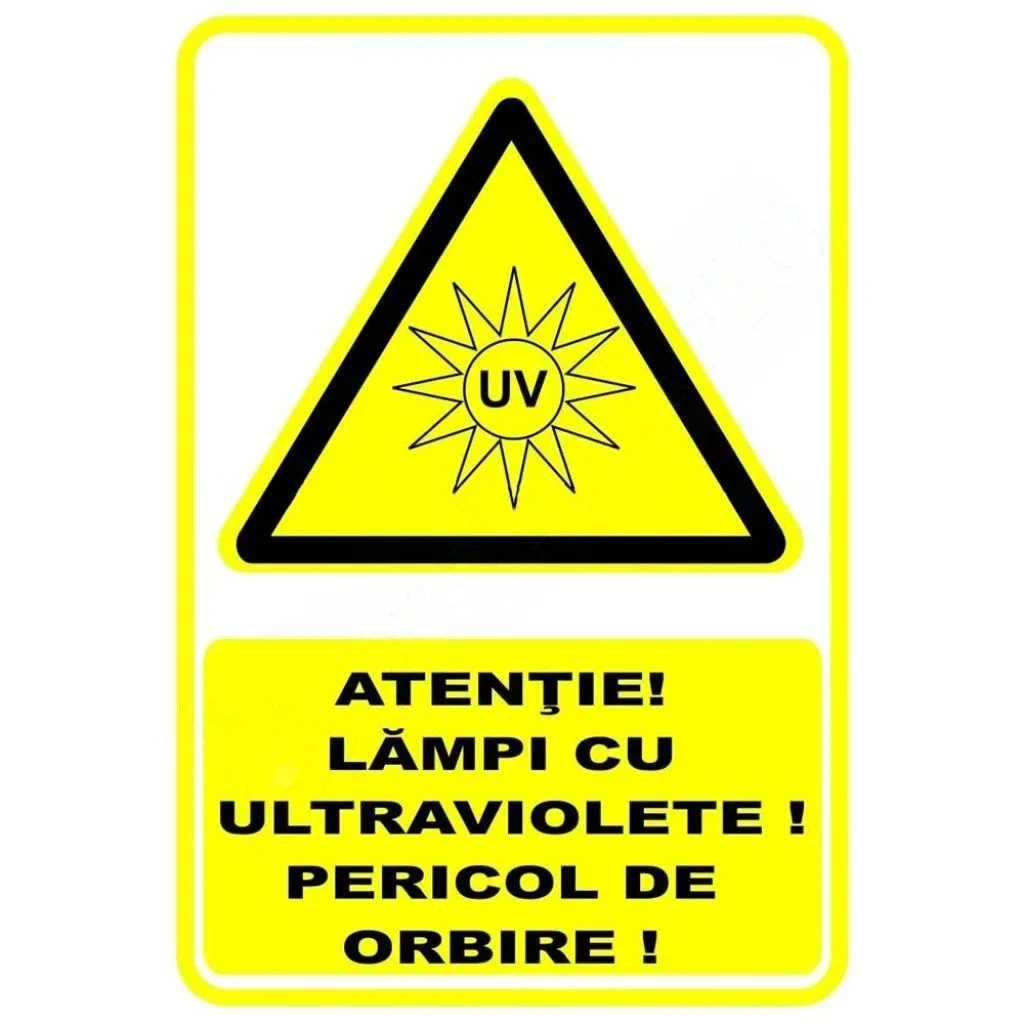
Warning signs usually have triangular shape, yellow background and black contour. A black pictogram describing the risk appears in the center. Many models also include a short text, such as "Warning" or "Danger". Therefore, the message remains clear to visitors who do not know the place.
In other words, a hazard warning indicator combines the shape, color and image in a single message.
Why the pictogram matters more than the text
In a noisy hall, people don't read sentences, they recognize images. Some employees or visitors also speak another language. Thus, the pictogram conveys the risk even without words. However, the short text confirms the message and eliminates doubts. Therefore, we choose models with clear pictograms and short forms, such as ‘Warning'. In this way, a hazard warning indicator remains easy to understand for anyone.
Main risks reported
Category warning safety indicators includes over a hundred models, grouped according to the type of risk. Below you will find a few common examples in industry and construction.
- Electric: Warning Electrical Hazard and Voltage equipment.
- Radiation and light: Hazard laser beam, UV lamps or radioactive materials.
- Mechanical: Scratch hazard and spark design.
- Internal circulation: vehicles on wheels, such as stackers.
- Outside: Snowfall hazard and turtles.
Thus, for each real risk there is a warning indicator for the dedicated hazard.
Safety warning indicator in warehouses and workshops
In warehouses, the main risk often comes from the circulation of stackers. Therefore, the sign ‘Warning Vehicles on Wheels' has its place at the intersections of colours. Then, areas with high shelves may require warnings of falling objects. On the other hand, workshops bring electrical and spark design risks. Laser laboratories or UV lamps also need dedicated signs. Therefore, each space receives a hazard warning indicator adapted to the activity.
Where you place a warning sign for danger
First, put the sign before the risk zone, not in the middle of it. Then choose a height at the level of the look, so that it does not lose among the machines. It also ensures good illumination of the area. In addition, avoid places where an open door or shelf covers the sign.
At the same time, a hazard warning indicator remains effective only if you see it in the direction of travel.
- At the entrance to the electrically-painted rooms.
- Next to the moving parts cars.
- On the tracks run by the stackers.
- Under squeezing, in the cold season.
For the employer's obligations to signal, consult Labour Inspectorate.
Warning indicator for danger or sign of prohibition?
The warning sign announces a risk, but does not impose an action. Instead, the sign of prohibition stops behaviour, e.g. smoking. On the other hand, the sign of obligation requires action, such as wearing the helmet. Therefore, in many areas the three types combine.
See and prohibition indicators and mandatory indicators. For example, in addition to a warning sign for the electrical hazard of chickens and a sign prohibiting access to unauthorised persons.
Visibility in low light conditions
Some areas remain dark, such as basements or technical rooms. In this case, the local lighting makes the sign easy to notice. Then, for escape routes there are also photoluminescent variants in a separate category. It also avoids strong reflections on the surface of the sign. Thus, a hazard warning indicator retains its role and when the light drops.
How to choose the right model
It starts from the risk assessment, which shows what dangers exist in each area. Then, note the main risk and distance from which people must see the sign. It shall also check whether the text of the sign corresponds to the actual situation. In this case, a hazard warning indicator shall convey the exact message without confusion.
However, too many signs to a place tire the look. So just keep the necessary signs and group them together logically.
Maintenance of warning signs
The dust, oil and sun are falling in contrast over time. It therefore deletes the signs at regular checks. Then immediately replace a warning indicator for bleached or broken danger. In addition, it shall review the signal after any change in flow or equipment.
Instructing employees about signs
A new sign works better if people know what it means. Therefore, it shall provide the alert to the regular training of the staff. Then it shows on the field where each sign is and what risk it announces. In addition, he asks employees for their opinion, as they observe the first hidden signs. Thus, each hazard warning indicator becomes part of the firm's safety culture.
Frequently Asked Questions about Warning Signs
Do I need a hazard warning indicator in every area?
The obligation depends on the risks identified at the workplace. Risk assessment and specific legislation show where you put the signal.
What does the yellow color mean?
The yellow alerts and a possible danger. At the same time, the contrast with black makes the pictogram visible from a distance.
Can I use an outdoor hazard warning indicator?
Yes, for example, for the fall of snow and turtles. However, check the material and fastening, so that the sign can withstand the wind and rain.
In conclusion, the correct signaling starts at real risk and continues with the visible location. See range of warning safety indicators, and the Protrafic.ro team helps you choose each hazard warning indicator.