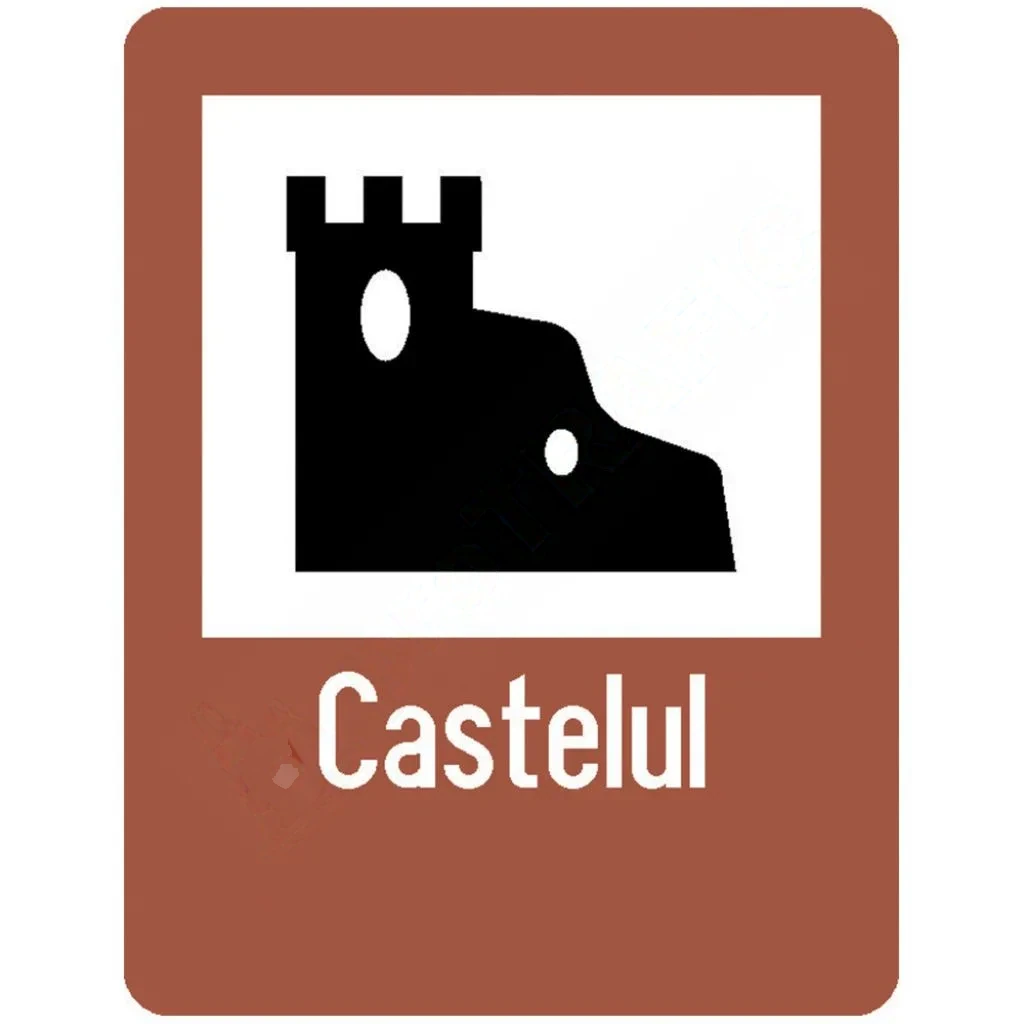
Brown tourist indicator: what it signals and how you choose it
A brown tourist indicator announces from time to time a cultural, natural or leisure objective: a citadel, a monastery, a waterfall or a resort. The color and pictogram make it easy to recognize. Find out what symbols exist, who mounts them, and what rules of location matter.
In short: brown marks tourism, codes T1–T18 describe the objective, and the assembly on the road requires the agreement of the road manager.
Do you need help choosing?
Tell us what you need and we'll send you the offer on the same working day.
A brown tourist indicator values the local heritage and makes it easier for visitors to travel. Choose the pictogram that accurately describes the objective, mount the sign before the intersection and complete the route with guidance indicators. On public roads, first obtain the agreement of the road manager and periodically check the readability of signs. Discover all symbols in the category Tourist signs and choose the right set.
A brown tourist indicator tells the driver that nearby there is an objective of cultural, natural or leisure interest. The brown colour immediately distinguishes it from the usual orientation indicators. Thus, the tourist recognizes the message just before reading the symbol. In addition, the simple pictogram passes easily across the language barrier for foreign visitors. Also, the tourist signs link the main roads to less known targets.
What a brown tourist indicator transmits
The colors of the road signage have different roles. For example, red warns or prohibits, and blue forces or informs. In contrast, brown indicates tourist and cultural objectives. Therefore, a brown tourist indicator does not impose any traffic rules, but provides useful information. However, it complies with the same visibility and location requirements as the rest of the road signs.
Cultural and religious objectives
Category Tourist signs find symbols for the most common heritage goals. For example, indicator T1 Castel – Cetate Mark the fortified historical monuments. Then, indicator T4 Church and the T5 Monastery lead visitors to the places of worship. Especially in rural areas, these signs bring out churches or cities hard to find without help. Thus, a brown tourist indicator helps communities to value their heritage.
Natural and leisure objectives
Nature has its own pictograms. For example, T6 Natural Reserve, T7 Cascade and T8 Fish signals destinations outside the localities. In mountain areas, T9 Ski trail and T11 Telecabine direct tourists to leisure facilities. Also, T12 Pension Agroturistica marks the accommodation from the rural environment. Thus, a brown tourist indicator becomes a concrete tool for local promotion.
Pictogram, text and readability
The pictogram remains the central element of the tourist sign. However, the name of the target and the distance, when they appear, helps the tourist to decide from time. Therefore, the text must remain short and easy to read from the walk. In addition, a detailed brown tourist indicator loses exactly the visual advantage the driver is looking for. So keep the message simple, with a symbol, a name and, if necessary, an arrow.
Stations and objectives of particular importance
General messages are available for wide destinations. For example, indicator T15 Tourist Station announce the proximity of an area with a tourist profile. In contrast, T16 and T18 set targets of particular importance. Therefore, choose a general brown tourist indicator or one specific to the nature of the objective. In other words, do not use the cascade symbol for a whole reservation or vice versa.
How do you plan the route with the brown tourist indicator
Only one sign rarely reaches for an objective far from the main road. First, it establishes the starting point, usually the intersection with a county or national road. Then walk the car route and note each intersection where the driver may be wrong. At each such point, a brown tourist indicator confirms that the tourist is heading in the right direction. It also repeats the same pictogram throughout the route, so that the message remains coherent. Finally, on arrival, the sign marks even the entry into the target.
On the other hand, do not load the route with unnecessary signs. Thus, the tourist clearly sees the direction, without wasting time reading. In other words, each sign must answer a concrete question from the driver.
Who mounts a brown tourist indicator
De obicei, primăriile, consiliile județene și administratorii de drumuri inițiază semnalizarea turistică. Uneori, și proprietarii unor obiective private, cum ar fi o pensiune, își doresc un astfel de semn. Totuși, amplasarea pe domeniul public necesită acordul administratorului drumului și al autorităților competente. Prin urmare, un indicator turistic maro se montează doar după obținerea avizelor necesare. Textele legale relevante le găsești pe legislatie.just.ro.
Placement and visibility: the right mounted brown tourist sign
- Mount the sign before the intersection, not even in its right.
- Make sure the vegetation doesn't cover the face of the indicator.
- Use suitable pillars, such as those in the category Positions for indicators.
- Avoid crowding more signs on the same pillar.
In addition, a brown tourist indicator must remain legible and at night, in the light of lights. Therefore, periodically check the condition of the surface and clean the deposits. On the other hand, combine the tourist sign with guidance indicators when the route has multiple intersections.
Common errors
The first mistake occurs when the sign announces an objective, but nothing confirms the direction at the following intersections. Thus, the tourist loses himself halfway. Another problem arises when a brown tourist indicator stands too close to the intersection. The second mistake bears the symbol: the chosen pictogram does not correctly describe the objective. In addition, some signs remain on the pillar after the target has closed. So, a brown tourist indicator needs a periodic check, just like any other road sign.
Frequently asked questions: brown tourist indicator
Can I mount a brown tourist indicator on my own?
On your property, you can use the sign as simple information. On the public road, however, you need the consent of the road manager.
What does T1, T7 or T15 mean?
Each code corresponds to a pictogram. For example, T1 marks castles and towns, T7 falls, and T15 tourist resorts.
Can multiple symbols be combined?
Yes, but with measure. A brown tourist indicator with too many symbols makes reading from the walk difficult.
Does the tourist sign replace the direction indicator?
No, the two work together. The guidance indicator gives direction and the tourist sign specifies the objective.
Where does signaling a target start?
It depends on the route and the access roads. In general, signaling starts from the nearest intersection with an important road.
In conclusion, a well-chosen and correctly located brown tourist indicator brings visitors and makes their way easier. See all symbols in category Tourist signs, and Protrafic.ro helps you choose the right signs for your project.