Tactile marking for visually impaired people: types, location and mounting
A tactile marking for visually impaired people transmits information through the ground and through the cane: where you go and where you stop. For people with impaired vision, these surfaces make the difference between safe travel and risk. See what types exist and how you mount them.
In short: Striped plates guide the route, warning plates announce the stop; stick them with dedicated adhesive, after an accessibility plan.
Do you need help choosing?
Tell us what you need and we'll send you the offer on the same working day.
A well-thought-out tactile path allows people with vision impairments to move themselves safely. The 300 x 300 mm guide plates and 600 x 300 mm carpets form the corridor, and STOP markings announce the stairs and passages. The dedicated adhesive keeps them fixed, and the periodic check keeps them efficient. See all solutions in category tactile marking and plan the complete route of your building.
A tactile marking for visually impaired people works as an indicator read with your feet. His relief clearly differs from the surrounding flooring. Thus, the person with vision impairments feels the path with the heel or with the stick. Next, we explain the types in the category tactile marking And how you use them properly.
How a tactile marking works for visually odded people
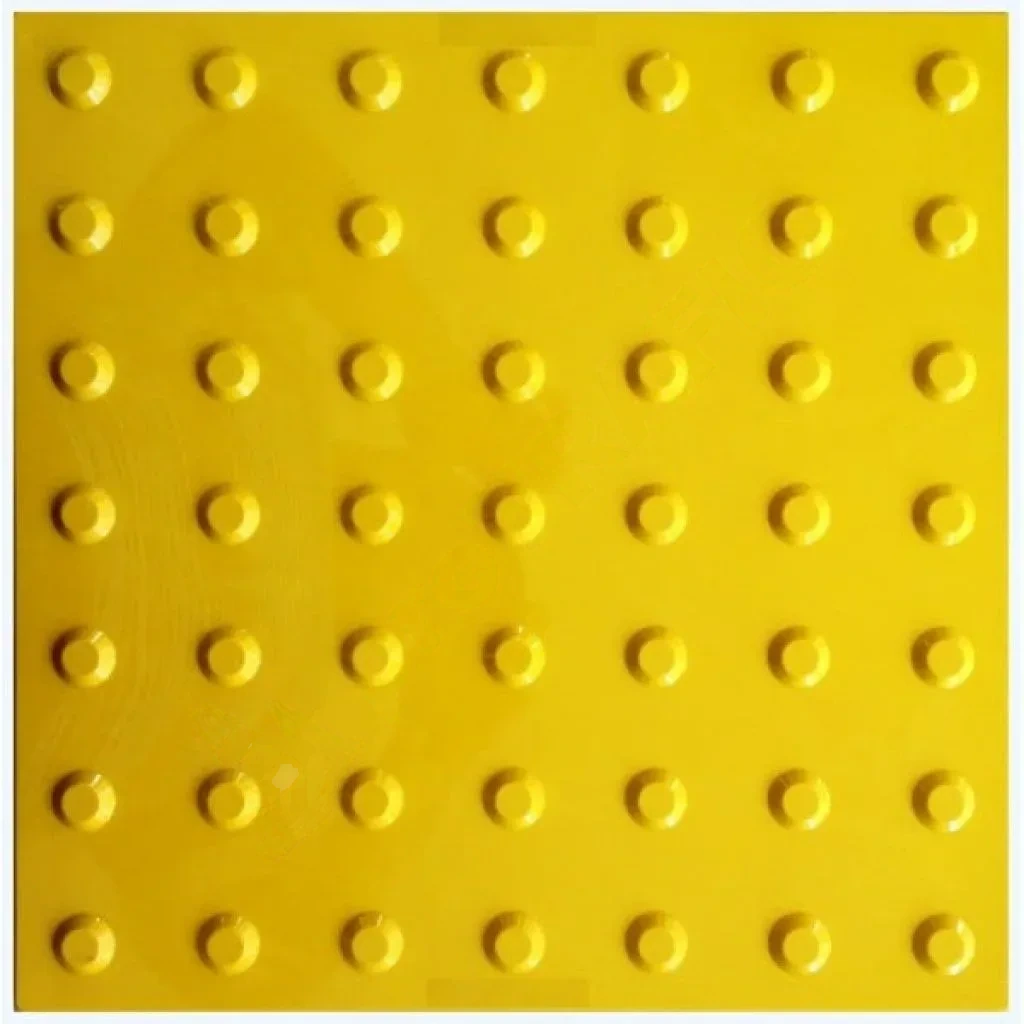
The system uses two types of relief. The first, with parallel stripes, shows the direction of the walk. The second, with round prominences, indicates a danger or a stop. The user is therefore learning a "simple alphabet" that he finds in many cities.
The contrast of color helps people with poor vision, not just those who are blind. For example, a black plate on an open floor is seen from a distance. So, a touch mark for visually odded people works both by touch and visual.
Who benefits from a tactile path
First, the route helps blind people who use the white stick. Then it helps people with weak vision, who follow the contrast of color. Also, older adults and parents with carriages observe the margins of the stairs more easily. So, a tactile marking for visually odded people brings benefits to the entire community.
However, efficiency depends on consistency. If each building uses another model, the user is misled. It therefore retains the same type of relief throughout the route, from the street to the shed. In other words, a tactile marking for visually odded people works best in a coherent system.
Guide markings
The steering plates form a continuous corridor. They take the person from the entrance to the garage, to the elevator or to the stairs. For example, 300 x 300 mm tactile guide marking Fits for inside routes. For larger surfaces, 600 x 300 mm orientation tactile carpet, black cover the length of the route faster.
However, a guidance path only makes sense if it does not suddenly interrupt. Every tactile marking for visually impaired people must go somewhere useful.
Warning markings and STOP
Warning appears before a danger: a ladder, a perimeter or a pedestrian crossing. Here the man has to stop and check. That's why you choose a STOP touch mark 300 x 300 mm or 600 x 300 mm tactical warning surface. In other words, a tactile marking for the visually odded people of STOP type says "care, follow a change.
Where you mount a tactile marking for visually odded people
- At entrances to public buildings, to reception or desk.
- Before the stairs, at the top and at the bottom.
- On the sidewalk, at pedestrian crossings.
- Near the elevators, to mark the call point.
At the same time, keep the route clear of obstacles: gables, panels or bicycles. A blocked path completely loses its role. For example, in a city the route starts from the door and reaches the record without interruption.
Assembly of a tactile marking for visually odded people
The plates applied to the existing flooring shall be fixed with dedicated adhesive. For that, you use tactile marking sticker. First, clean and dry the surface. Then pull the position of each plate on the floor. Finally, apply the adhesive and press the plate evenly.
So, a tactile marking for the visually odded people correctly fixed stays on the spot and does not rise to the margins. However, it shall comply with the instructions in the adhesive sheet concerning the temperature and time of take-off.
On the other hand, complete renovations can integrate the plates directly into the floor. In this case, discuss the solution with the designer and the construction firm.
Accessibility plan for a tactile marking
Do not buy any tactile markings for visually odded people at random. First, draw the person's actual path from the transport station to the door. Then mark the decision and danger points. At the end you can only calculate the number of guidance and warning plates.
The final solution shall be established after the design and the applicable accessibility requirements. Accessibility legislation finds the Legislație.just.ro. Therefore, a tactile marking for visually odded people is part of a system, not a decoration.
How to Check a Touch Mark for Visually Impaired People
Over time, dust and wear reduce relief and contrast. Therefore, periodically verify that the plates remain glued to the entire surface. It immediately replaces a loose plate, as the high margin may cause hindrance. It also cleans the route with products that do not leave films slippery. Winter, remove the snow without hitting with the blade any tactile markings for visually odded people.
Touch marking and Braille indicators
The floor markings guide the steps, but they don't say what's in the room. For that, you mount to the signpost doors in relief and Braille. Find models such as house, register or countertop in category Braille tactile marking. Also, for visual signals on the floor, see floor indicators.
Thus, a tactile marking for visually odded people and a Braille indicator work together.
Frequently asked questions: tactile marking for visually odded people
What is the difference between guidance and STOP?
The guide has stripes and shows the direction. The STOP warns of a danger and calls for stopping.
Fits a tactile marking for visually odded people and outdoors?
Depends on the model and the surface. Check the recommended use and type of flooring in the product file.
Why does the color of the plates matter?
The contrast helps people with poor vision to observe the path. Therefore, choose the color after the shade of the flooring.
How many plates do I need for a hallway?
Measure the length of the route and divide it on the side of the plate, i.e. 300 mm or 600 mm, according to the model. Then add the warning plates from the heads and from the direction changes.
In conclusion, a tactile marking for visually odded people provides independence and safety at every step. View all models in category tactile marking, and Protrafic.ro helps you choose the right types and quantities.