Solar marker for the road: how it works and where you mount it
On an unlighted road, the light of the headlights does not always arrive in time in curves or at bridges. A solar road marker emits its own light, charged day from the sun, and contours the route before the car approaches. Thus, the driver sees the direction earlier, without cables and without connection to the network.
In short: the solar markers are active, the reflector buttons are only turning the lights back on; you choose them after lighting, curves and the available sun.
Do you need help choosing?
Tell us what you need and we'll send you the offer on the same working day.
Active signage brings a real plus where reflection does not reach: unlit curves, bridges, rotating senses or parking alley. Choose places with enough sun, periodically clean the panel and check the evening if each unit lights up. On public roads, the location follows the project approved by the administrator, and the combination with passive buttons keeps costs under control. See the solar road button and aluminium marker in the category solar markers.
A solar road marker emits its own light and contours the band even where the headlights don't yet arrive. Unlike a classic reflector, it doesn't expect the car's light. So, the driver sees the route earlier, especially in curves and in bad weather.
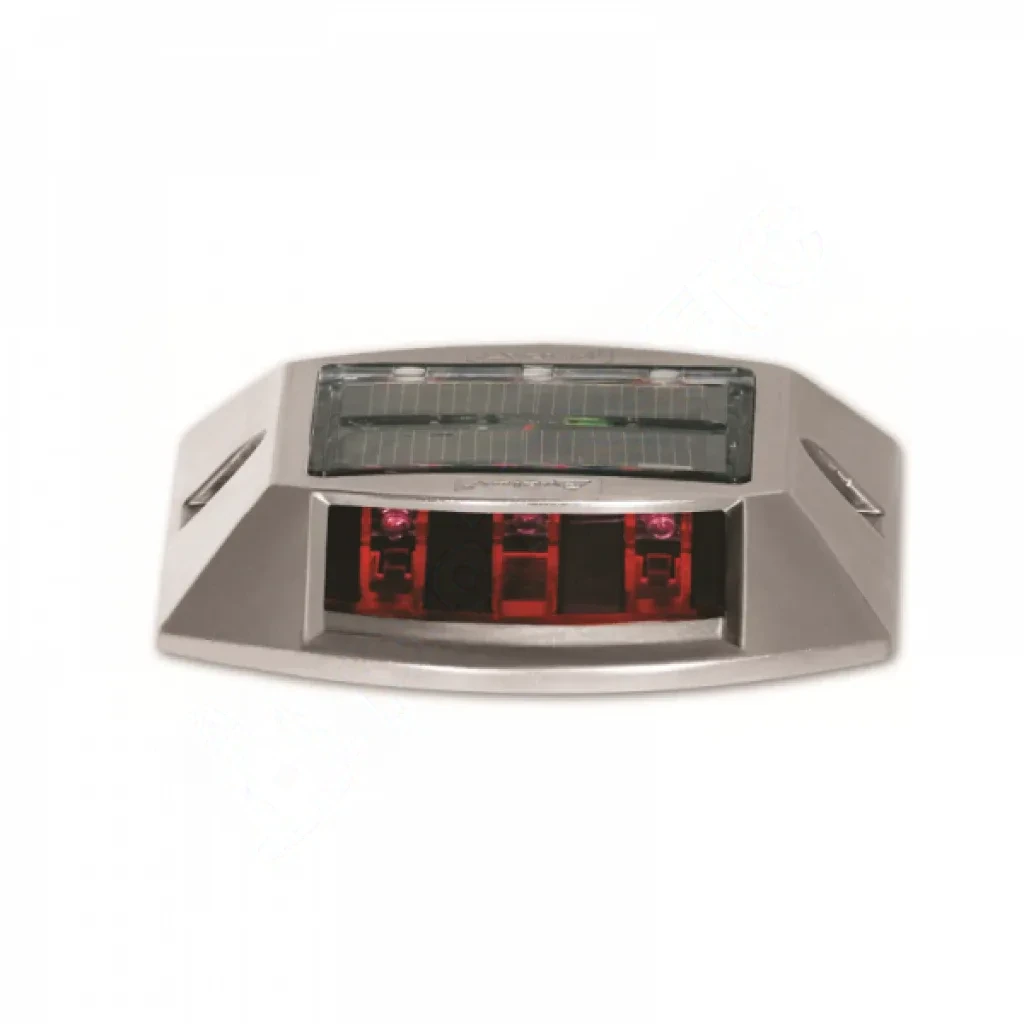
What a solar road marker contains
Construction follows the same logic in most models:
- A small photovoltaic panel that captures energy during the day.
- An internal battery, which stores energy for the night.
- LEDs of high visibility, with fixed or intermittent light, depending on the model.
- The resistant housing, which protects traffic components and weather.
Therefore, a solar marker for the road does not require cables, digging for power or network connection.
In addition, the lack of cables greatly simplifies the work. For example, don't cut the asphalt over long lengths and you don't need an electric painting. At the same time, its own light also helps pedestrians or cyclists to see the edge of the alley.
Active or passive: difference from reflective buttons
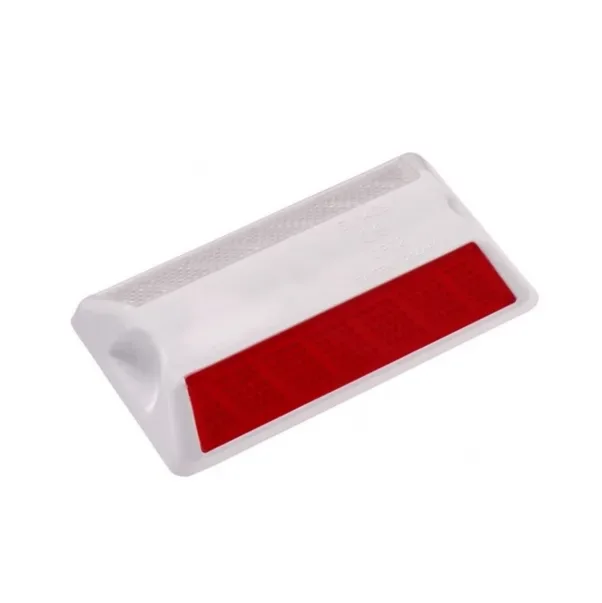
One Road reflector button work passively. In other words, it only shines when it receives light from the lights. Instead, the solar marker illuminates itself, so you see it from a greater distance. However, not every trunk needs a solar marker for the road.
On a well-lit alignment, the marking and passive buttons can reach. On the other hand, in an unlit curve, a solar marker for the road brings a more clear safety. Find passive variants in the category Reflective buttons.
In practice, the two types work well together. For example, passive buttons mark the alignment, and active markers appear only in curves and at passes. Thus, investment goes where it matters more.
Two options of solar marker for the road in offer
Both models are part of the category solar markers. However, each has another mounting place.
Solar Road Button
Model solar road button shall be mounted on the roadway or on the traffic surface. Thus, it delimits strips, islands, pedestrian passes or parking spaces. At the same time, you use it in the parking lot or in the logistics areas.
Aluminium Solar Marker
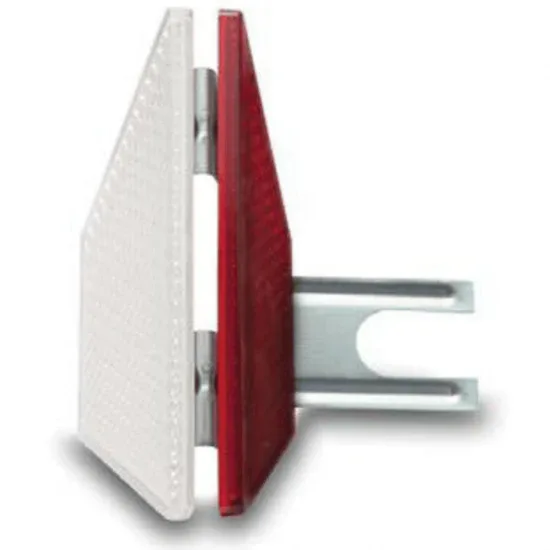
Version Aluminium solar marker has bifacial construction and aims at the edge of the road. Therefore, it indicates both directions from the same point. That's why this solar road marker fits on the edges of the road, bridges or roads without lighting. At the same time, the aluminium housing offers a compact construction, suitable for mounting on the edge.
Fixed or intermittent light
Some models work with fixed light, others with intermittent light. The fixed light quietly contours the path, so it matches the road edges and alleyways. Instead, intermittent light attracts more attention. Therefore, you use it before pedestrian crossings or obstacles. However, too many intermittent points on the same trunk tire out the look and may mislead the driver. So, a solar marker for the intermittent light road only works where there is a danger.
Where you mount a road marker with LED
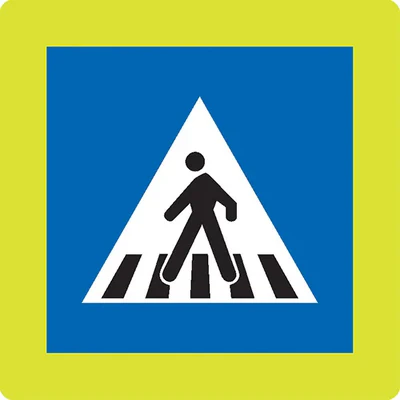
- Before pedestrian crossings, to announce the crossing area.
- On the islands and the banks of the rotating senses.
- In dangerous curves and on mountain roads.
- On bridges and in passages with weak lighting.
- In parking lots, on the alleys and at the access ramps.
- On the internal roads of the warehouses, where machinery circulates.
However, on public roads, the location of any solar marker for the road follows the signalling project approved by the administrator and the authorities. For travel rules, see the information on the website Romanian Police.
The assembly on the roadway, in short
- Clean and dry the surface because the adhesive does not catch on dust or moisture.
- Mark positions with chalk at equal distances.
- Fix each unit with the adhesive or anchors required by the manufacturer.
- Leave the recommended take time before you reopen the traffic.
Then, check the first night if every solar marker for the road lights up. Thus, you are correcting an incorrect position or a defective unit in time.
Influencing the autonomy of a solar road button
The energy stored depends on the sun received the day. So, choose places without permanent shade from buildings, trees or panels. Winter, the short days reduce the load, so the autonomy decreases. Besides, the dust and snow on the panel block the light. In addition, an old battery holds less, even if the panel loads normally.
Therefore, we recommend regular cleaning of the surface. After that, check periodically if each solar marker for the road lights up at night. Thus, you quickly identify units with tired battery.
Solar markers in parking lots and on construction sites
Not only do public roads benefit from active signaling. For example, a parking administrator can contour the alleys, and a logistics firm can mark the route of the stackers. For temporary work, though, you rather use a Solar lamp for works, Easy to move. Instead, a solar marker for the road remains fixed and works long-term.
For warehouses and halls with car access, markers can also mark pedestrian paths near the ramps. Therefore, the machinery drivers see the limits of the corridor more easily.
Frequently Asked Questions: Solar Marker for Road
Does it work without strong sun?
The panel is also loading in the cloudy sky, but slower. Therefore, in long periods without the sun, autonomy decreases.
Can you resist passing the cars?
The housing supports traffic, but the actual resistance depends on the model and assembly. Therefore, respect the manufacturer's instructions on glue or anchoring.
Does it replace the road marking?
No, no. A solar marker for the road completes the marking and the indicators, does not replace them.
Can I use the markers in parking a block?
Yeah. For example, you put them on the edge of the alleys or at the entrance to the ramp, where the public light is missing.
The two models you find in the category solar markers. The Protrafic.ro team helps you choose, so that each solar marker for the road will match the mounting site, the existing lighting and traffic in the area.